



BMW versus Volkswagen: who really won the war for Rolls-Royce
In 1998 Volkswagen won the auction for Rolls-Royce with 790 million dollars and took home the Crewe factory, the technology and the staff. But the Rolls-Royce name did not belong to the seller, and BMW bought it separately for 65 million. In this story I tell how a due diligence mistake decided who owns the most prestigious brand in motoring today, and what it teaches anyone who runs a company: the brand beats the factory building.
We need your consent to play it: YouTube uses cookies that may profile what you watch.
Cookie preferences- The real value is in the client's head. Volkswagen bought the factory, technology and staff; BMW bought the name, and won.
- Always check who owns what. Domain, registered trademark, licences, authorisations for distributors: one detail can cost millions.
- As well as producing well, you have to know how to get chosen. The client chooses with their mind.
- Reputation is bought with intelligence. Volkswagen spent 790, BMW 65.
A 790 million mistake
In 1998 Volkswagen bought the Rolls-Royce factory, but it was BMW that took the brand. Which of the two won? This is a business story in which we compare the brand with a physical asset such as a property or a factory building. Both important, but one more fundamental than the other. The protagonists are two German giants, BMW of Munich and the Volkswagen group of Wolfsburg, and the most prestigious brand in the car world alongside Ferrari: Rolls-Royce. In the middle, a 790 million dollar mistake.
The context: Europe 1998
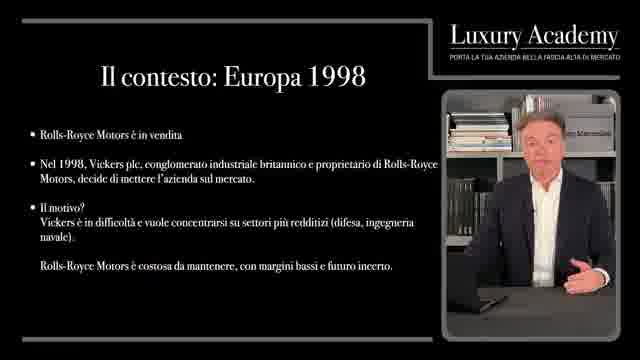
It is 1998. British car makers are in crisis, while the German ones are enjoying years of boom, revival and growth. Rolls-Royce is for sale. It is owned by Vickers plc, a large British conglomerate focused mainly on defence: tanks, helicopters, heavy weapons, naval engineering. Rolls-Royce was a jewel, but it was not consistent with the core business, and Vickers decided to put it on the market to concentrate on its profitable sectors.
The auction begins
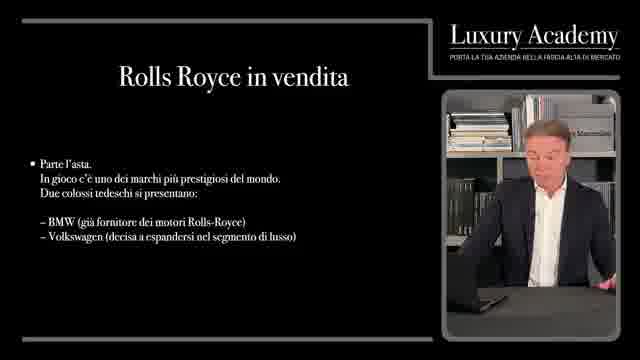
Vickers holds an auction: whoever is interested takes part, and may the best bidder win. Two German giants step forward. BMW, already the supplier of the engines for Rolls-Royce cars, and Volkswagen, determined to expand its portfolio of brands into the luxury segment. Volkswagen already had a good portfolio: Audi for premium, a stake in Porsche, and at the lower end the newly acquired Seat and Skoda. Ferdinand Piëch, the chief executive, was an exuberant, brilliant mind, a hard worker with a spirit of absolute market domination and a policy of heavy investment in all the brands, which later led him to acquire Bugatti as well. On the other side BMW wanted to expand in England with new brands, and in those years it also acquired the Rover group with Range Rover and Mini. Both wanted the jewel in the English crown in their portfolio. The Independent of 26 March 1998 ran the headline that Volkswagen was joining the battle for Rolls-Royce.
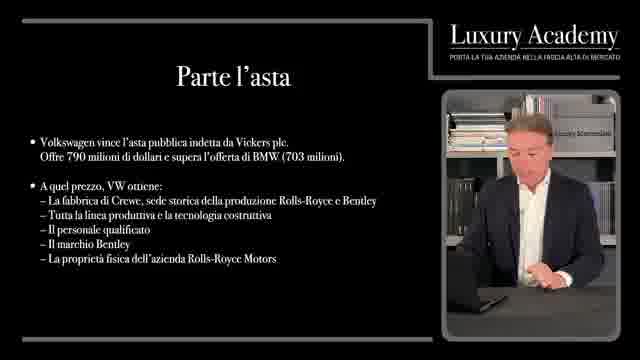
Who wins? BMW offers 703 million dollars, Volkswagen 790 million, and Volkswagen wins. What does it get? The Crewe factory, historic home of Rolls-Royce and Bentley production, the entire production line, the manufacturing technology, the staff, the Bentley brand and the physical property of Rolls-Royce Motors. The most famous model of the time was the 1998 Silver Seraph, one of the last products under Vickers before the move to Volkswagen.
The 790 million mistake
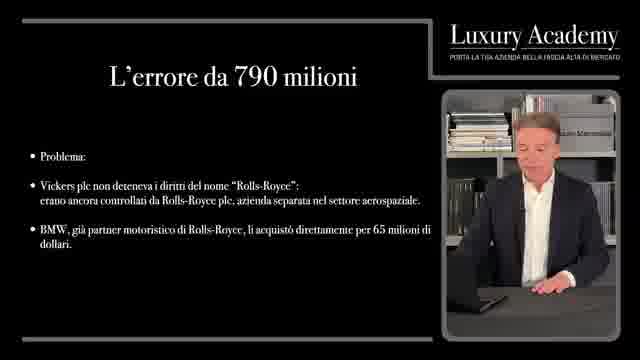
There is a problem, though. Vickers did not hold the rights to the Rolls-Royce name and brand: they were still controlled by Rolls-Royce plc, a separate company in the aerospace sector. If you look out of the window when you board a Boeing or an Airbus, the engines keeping the plane in the air very probably carry the Rolls-Royce symbol: it is that company, separate from Rolls-Royce Motors since 1973.
BMW made a shrewd move, a stroke of genius: it bought the rights to use the Rolls-Royce trade name for 65 million dollars. Volkswagen had won the auction and acquired everything; BMW, for 65 million, took the brand.
How did Volkswagen, one of the most serious and well-organised companies in the world, fail to notice that it was not buying the brand? It was a due diligence mistake, the check that professionals and lawyers carry out before an acquisition to verify the accounts and what is actually being bought. Volkswagen carefully analysed the physical and industrial assets, but did not investigate the intellectual property rights thoroughly: it believed the brand was included in the Rolls-Royce Motors package, and it wasn't. BMW, supplier and strategic partner of both companies, Motors and the aerospace business, knew. And while Volkswagen concentrated on Vickers and the car division, BMW was negotiating in parallel with whoever held the real intangible asset: the brand.
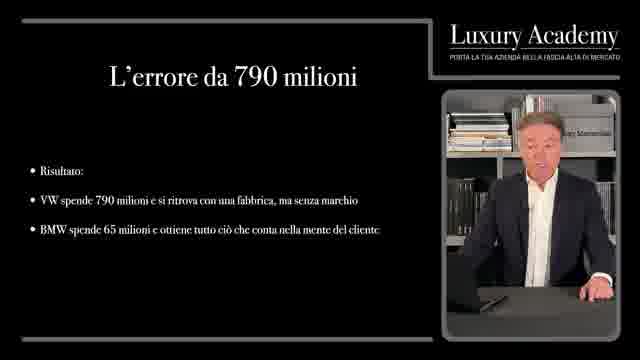
Piëch bought the whole package except the right to use the name, the image and the mascot. The result: Volkswagen spends 790 million and ends up with a factory without a brand; BMW spends 65 million and gets everything that counts in the client's mind. Volkswagen took machinery, staff, factory building, production line, and by luck, a real stroke of luck, the Bentley brand too, which turned a rout into a dignified defeat. It could not put Rolls-Royce on the cars from that factory, because the name did not belong to the factory.
BMW, for less than a tenth of the price Volkswagen paid, bought the right to use the name, the logo, the brand and the Spirit of Ecstasy statuette mounted on every bonnet. With these intangible assets, which you cannot touch but which live in the client's head, it built a factory from scratch and won in clients' minds: if today you see a car with Rolls-Royce written on it, you think that is the real Rolls. What counts is who holds the brand. The papers of the time wrote it: BMW buys the Rolls-Royce name for 65 million dollars, Volkswagen takes the factory and the Bentley name. And the harshest spoke of an extraordinary corporate coup de théâtre by BMW, with 40 million pounds for the right to build Rolls-Royces from 2003.
Volkswagen's plan B: Bentley
When Volkswagen discovered it had not bought the brand it was a huge shock. Piëch, a brilliant but proud mind, was not called into question: it would have been like questioning Napoleon during the Russian campaign. The German and British press laughed at the embarrassment: Volkswagen has bought the carriage without the name on the bonnet. But Piëch, a winner, did not let himself look troubled, at least in public, and did not admit the mistake, which was more his people's than his own, even if a chief executive has to keep them in check. He declared that Bentley was a strategic asset with more commercial potential than Rolls-Royce and decided to focus everything on Bentley, converting the Crewe factory and relaunching the brand in grand style. And it worked perfectly: today Bentley is a very successful brand in the Volkswagen group, and Bentley, Lamborghini and Porsche together make more than half of the group's profits.
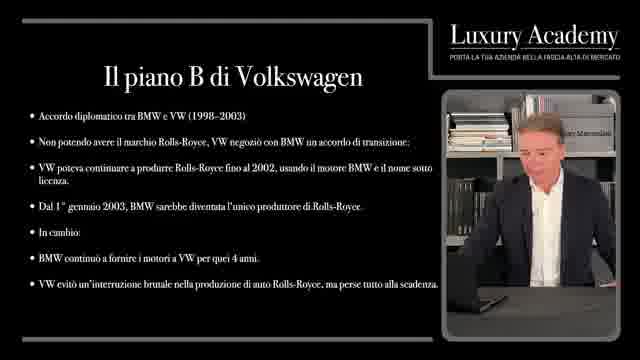
BMW and Volkswagen then reached a diplomatic agreement. Volkswagen could continue to produce Rolls-Royces until 2002, with the name under licence and BMW engines, and from 1 January 2003 BMW became the sole producer of Rolls-Royce, but not in that factory. In exchange BMW continued to supply engines to Volkswagen for a few years. Volkswagen, as a serious company, guaranteed continuity of deliveries, but when the agreement expired it lost everything. Meanwhile, in four years, BMW built a new factory at Goodwood, in the south of England, closer to the ports for deliveries around the world, very beautiful and theatrical. Today's Rolls-Royce range comes out of there: SUV, coupé, convertible and the flagship saloon. The Crewe factory, in the north, now produces the entire Bentley range, including the Bentayga SUV. The two factories are about 350 km apart.
More than 20 years on, we can say that both companies had the ability, resources and marketing to grow the two brands. But the winning move was BMW's, which bought the brand for 65 million dollars, while Volkswagen paid 790 million for factory, production, warehouses, offices and staff without being able to use the brand. The brand beat the factory building. Without Bentley it would have been a total loss, with closure and unemployment.
The 4 lessons for Italian SMEs
If we develop a strong brand, recognised by the public and positioned at the high end, the client doesn't care where the product is made. Of course, the brand has to have its own history: if we sell Made in Italy it will be produced in Italy, and I hope those listening produce in Italy. But the brand beats the place of production: consumers buy the brand and what is associated with it. At the high end, what counts are the three effects we explain in the live courses: the status effect, the bandwagon effect, that is, jumping on the winners' wagon, and the refinement effect, which rationally justifies the high list price.
1. The real value is in the client's head
Factories, walls and shops are important, but consumers choose us for the brand our products and services represent. Volkswagen got the factory, technology and staff, but not the brand, which BMW bought separately for 65 million. The company's real value is in the client's mind, an unbeatable intangible asset. Whoever controls perception and builds a high-end image around their brand controls their market. As well as in the shop, the office, the warehouse or the factory building, invest in the brand, the real asset of your company.
2. Always check who owns what
Volkswagen thought that winning Rolls-Royce meant winning everything. The rights to the name, the logo and the Spirit of Ecstasy were not for sale from Vickers but from the aerospace company. BMW knew; Volkswagen is a classic case of incomplete due diligence. The questions to ask: do you know who owns your website's domain? Is your brand registered, and in which markets? Are your distributors authorised to use your brand? Just yesterday a Luxury Academy client phoned us about a crisis between distributors in different countries, which arose because one of them was not authorised to use the company's images. Authorise distributors, agents and salespeople in writing to use the brand, and have them sign that when the contract ends they can no longer use it. Never take anything for granted: contracts, names, licences, authorisations. One detail can cost you millions, or worse, the name and reputation of your company.
3. As well as producing well, you have to know how to get chosen
Volkswagen had the factory, the machinery and the know-how. BMW started from zero, but with the right brand. From 2000 onwards everyone associated Rolls-Royce with BMW, and today the BMW Group has the main BMW brand, the luxury brand Rolls-Royce, and Mini. The client chooses with their mind. There is a competitive advantage that probably nobody in your sector is exploiting: positioning at the high end and creating a high-end brand. This allows you a multiplier above the sector average, so a higher selling price, a higher gross margin and, once fixed costs are taken out, a higher EBITDA: more profit for you and your company.
4. Reputation is bought with intelligence
Volkswagen spent 790, BMW 65. It was a matter of strategy, vision and attention to invisible details. To make an impact you have to invest wisely in positioning, brand and perception in clients' minds, whether you produce a physical product or a service, and in the ability to build marketing around the brand. Reputation is an asset that works for you continuously: your brand and your marketing should always bring you top-level clients, ready to spend significant sums.
Frequently asked questions
Why didn't Volkswagen get the Rolls-Royce brand?
Because Vickers, which was selling Rolls-Royce Motors, did not own the name: the rights belonged to Rolls-Royce plc, the aerospace company that had been separate since 1973. Volkswagen did due diligence on the physical assets but not on the intellectual property, and BMW bought the rights to the name for 65 million dollars.
Who makes Rolls-Royces today?
BMW, since 1 January 2003, in a factory built from scratch at Goodwood, in the south of England. The historic Crewe factory, bought by Volkswagen, now produces Bentleys.
Did Volkswagen lose 790 million?
Not entirely: the package also included the Bentley brand, which Piëch decided to relaunch, focusing the Crewe factory on it. Today Bentley, Lamborghini and Porsche together make more than half of the Volkswagen group's profits.
What can an SME learn from this story?
That the company's value is in the client's mind, that you have to check who owns the domain, the registered trademark and the licences, that the client chooses with their mind, and that reputation is built with strategy more than with budget.
One live webinar a month.
One topic, questions from the business owners who join, answers without sales slides. It's free and in Italian, and it's the simplest way to get to know us.
See the next webinar →