



Alfred Sloan: the genius who built General Motors and taught the world how to run a company
In the 1920s General Motors was a chaotic collection of brands at war with one another, while Ford was devouring the market with the Model T. Alfred Sloan turned it into number one with a method business schools still study: a decentralised structure with central control, a brand for every purse, the annual model, consumer credit and data-driven decisions. In this video I start from his book, My Years with General Motors, and turn each point into a lesson a small company can apply from tomorrow.
We need your consent to play it: YouTube uses cookies that may profile what you watch.
Cookie preferences- Structure beats talent. You need a system that works every day, even in a small company: an organisation chart, autonomous areas, numbers under control.
- Every brand must speak to someone. A ladder of offers differentiated by price and perceived value, which lets the customer move up without leaving your world.
- Give freedom, but keep control. Operational autonomy with regular reports.
- Renew to stay relevant. Update your offer periodically: the desire for novelty can be designed.
- Steer by the numbers. A simple, consistent dashboard: sales, margins, costs, cash.
- Help the customer buy. Make payment easier without touching the margin, especially on the first purchase.
- Change the structure when the goal changes. Don't wait for disaster.
The greatest businessman in American history
He built General Motors, he invented modern management, and the American trade press called him the best businessman in American history. This episode matters because it lays out the concepts behind modern business management: internal structure, marketing, branding, financing, planned obsolescence. We entrepreneurs need to draw on Alfred Sloan's wisdom, and I do so starting from the book I read and recommend to you.
His motto became legendary: a car for every purse and purpose, a car for every budget and need. At the time the leader was Ford with the Model T: one model, one colour. Sloan introduced the concept of a product range in a very sophisticated way, a range of products matched to a range of brands, where each brand speaks to a particular cluster of customers. It was the first time in history that a businessman, since he was both president and chief executive, invented and applied the laws of the modern brand to a company. He led General Motors from 1923 to 1956 and built an empire. He came decades before Steve Jobs and Elon Musk.
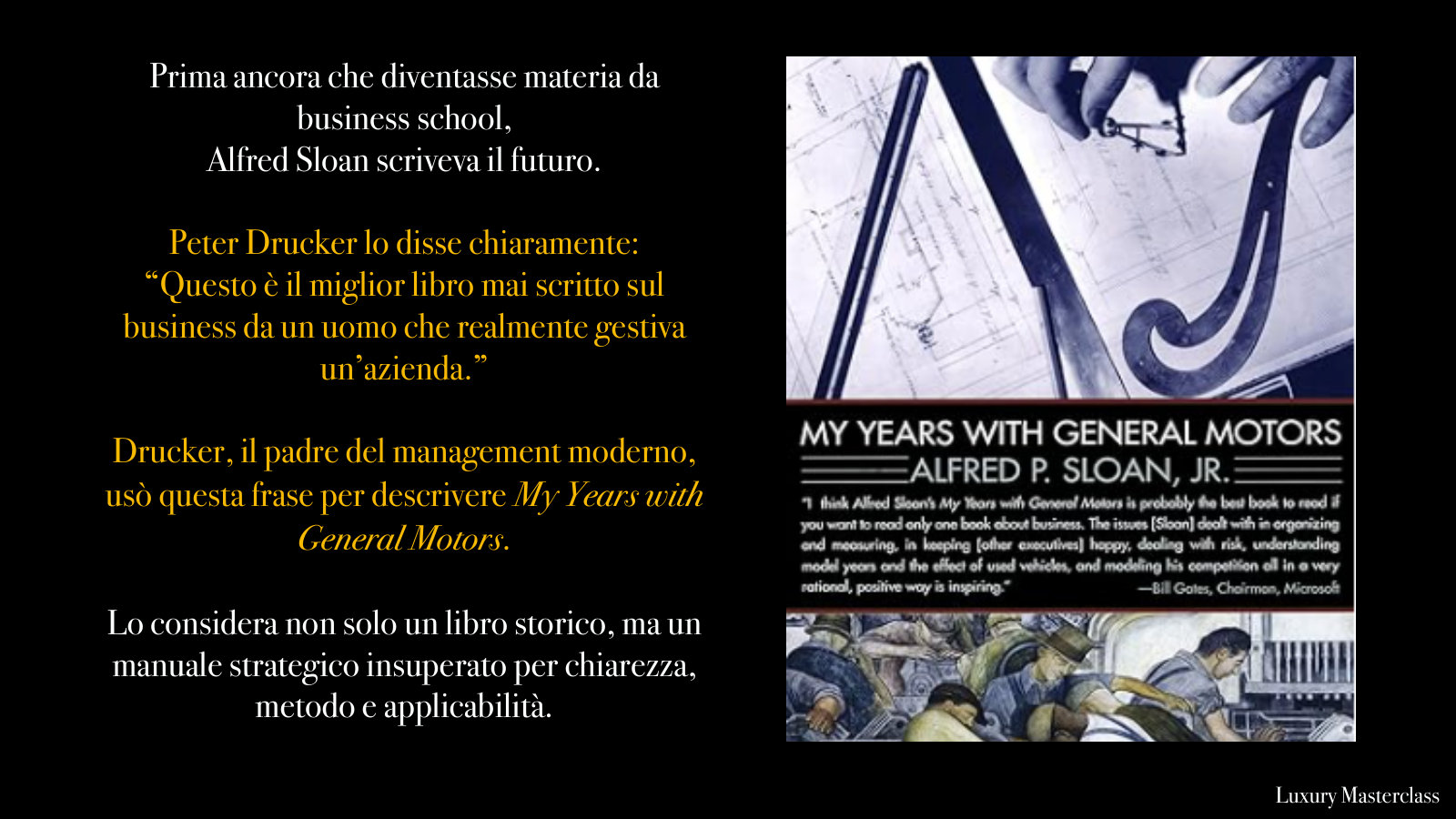
The book is called My Years with General Motors, 500 pages, translated into Italian and published by Il Sole 24 Ore. Peter Drucker, the father of modern management, called it the best book ever written on business by a man who actually ran a company. As well as a history book, it is a management manual.
What did he revolutionise, in 5 points? Company organisation, with the organisation chart and the divisional structure. Brand-based marketing strategy: one company, several brands, each speaking to a cluster of customers, with tiered pricing so that anyone who wants to rise in society rises through the General Motors brands. Financial management, with the introduction of consumer credit: you don't buy the car with a cheque, you pay for it with monthly finance. Product cycles, planned obsolescence: a new model every year or two, to make the customer's model feel old and encourage them to change. And a decision-making method based on numbers and control, today's management control, which he introduced in the 1920s.
The 1920s: General Motors against the Model T
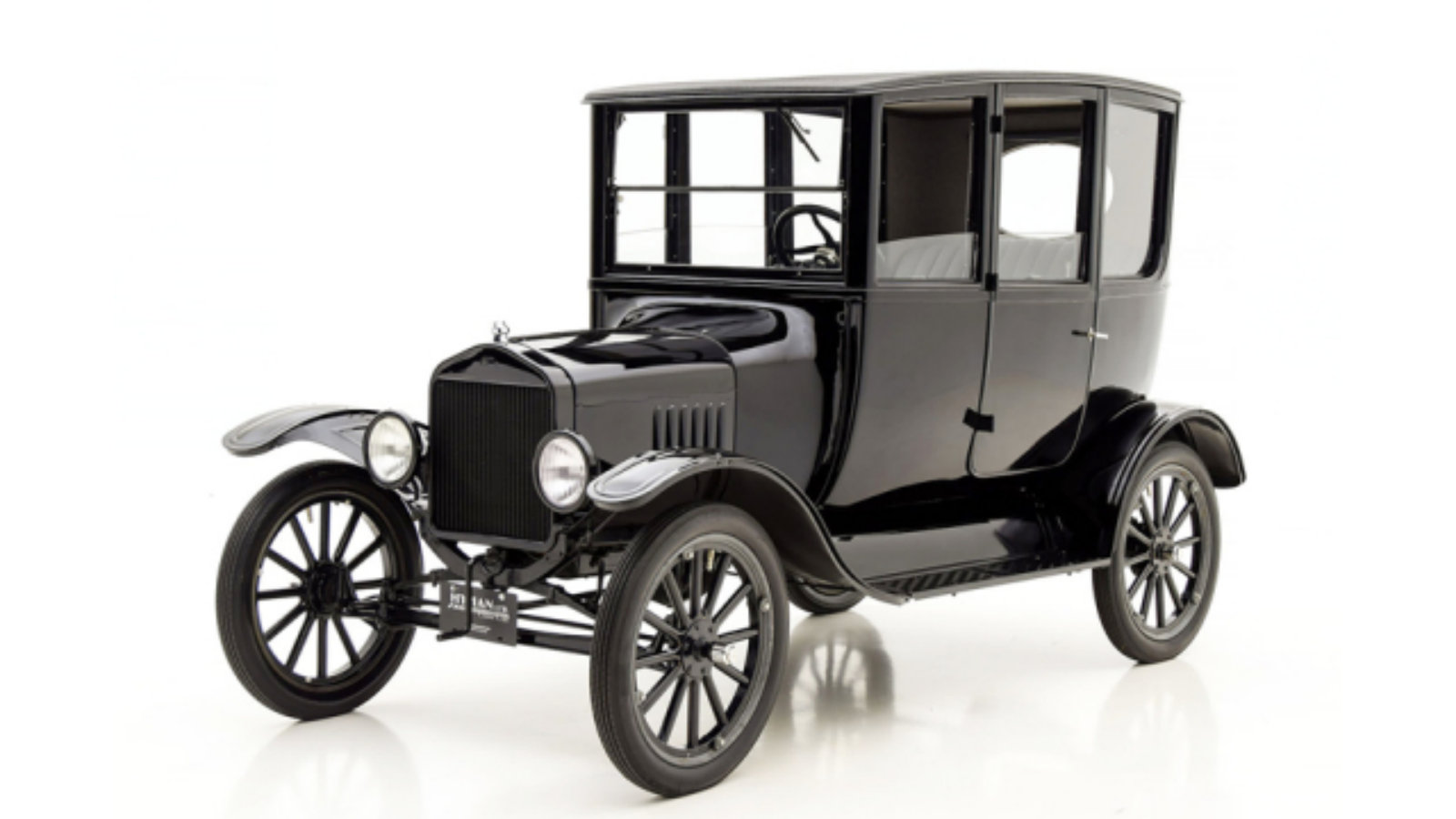
The General Motors of the 1920s is a chaotic group of brands with no unified direction. Each factory goes its own way: quarrels, inefficiencies, duplication. The risk of bankruptcy is real, because Ford is devouring the market with the Model T. GM has potential, but it lacks structure and a strategic vision. The Model T is cheap, works well and is mass-produced: a single model, a single colour, black. Numbers generate volume, volume generates turnover, turnover generates profit thanks to the scientific planning of production. The other side of the coin is rigidity: the inability to respond to changing demand, especially when a competitor arrives that designs a range across several brands and offers customisation options.
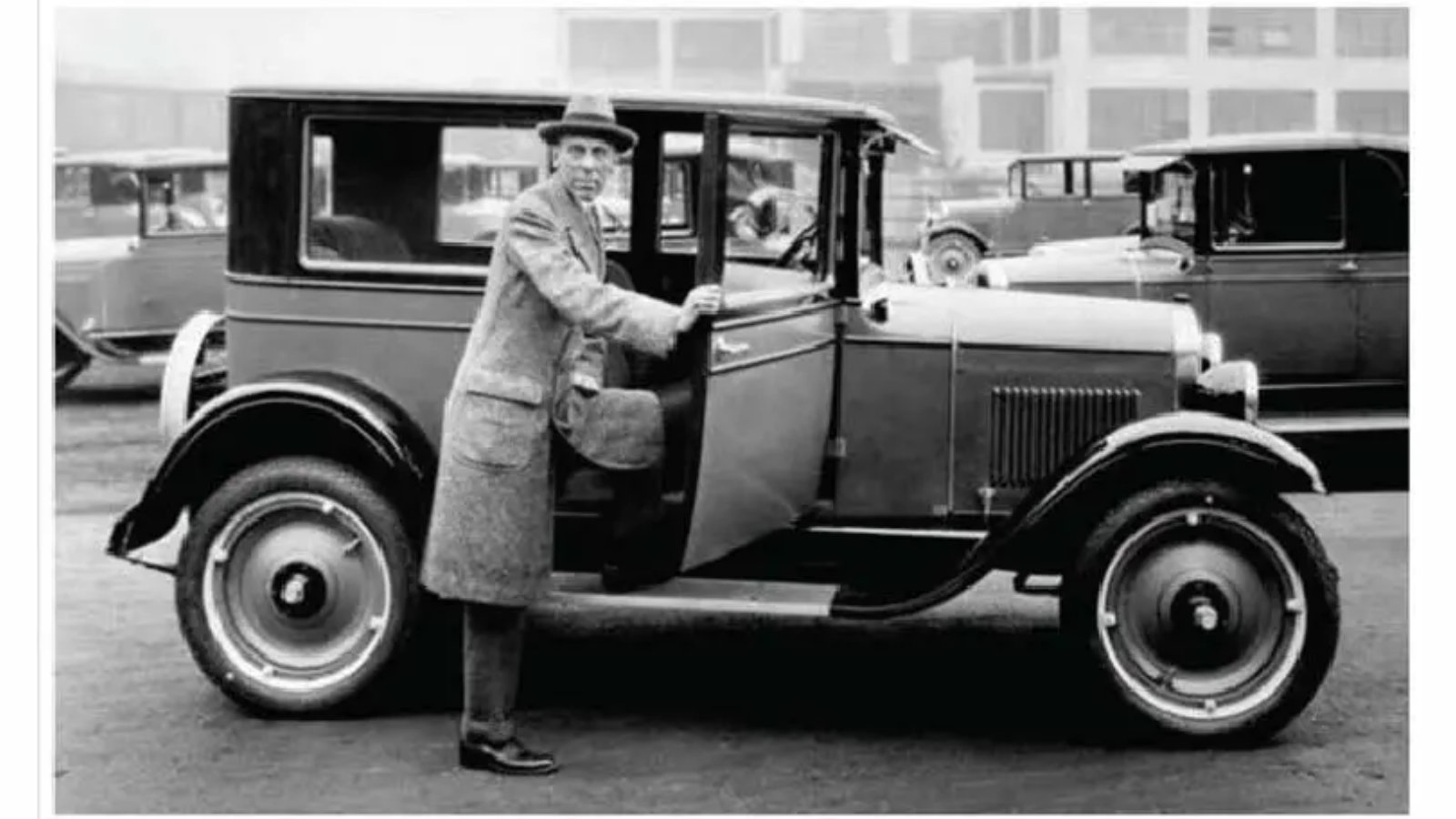
Alfred Sloan joins General Motors first as an engineer and then as a systems manager. He is a man of analysis and method, who observes, measures and plans. He understands that to win he has to do something different from Ford. He divides, structures and coordinates the company's internal divisions: each division reports to a brand, each brand has a range of products that speaks to a particular cluster of users. Within 10 years General Motors overtakes Ford in sales and profits, but above all it creates a system that lasts. Many multinationals still follow his hierarchical structure and brand divisions today: Procter & Gamble, and in luxury the LVMH group.
Sloan applies an architect's logic: every element has a function. The key words are internal order, with the centre commanding the periphery, meaning autonomous units that answer to the chief executive; variety of range; control of the numbers; maximisation of margins. He created a sales machine. Let's look at the 5 points that made General Motors the undisputed market leader, revolutionising management, branding, positioning and marketing.
1. Decentralised structure with central control
General Motors was a big, disorderly company, with its brands fighting each other for the same customer: same models, same pricing, a different name. Sloan understands that it needs branding, marketing, structure and discipline. He creates independent operating units, Chevrolet, Oldsmobile, Buick, Cadillac and others, each with its own management, budget and targets. The divisions stop competing with each other inside GM and compete on the market instead. The stroke of genius is a rigid price ladder: Chevrolet on the first rung, then Oldsmobile, then Buick, then Cadillac. That way the divisions don't cannibalise each other, and each has its own cluster of customers.
The group that, 100 years later, has best translated this philosophy is in my view the Volkswagen group, with Piëch and with the Italian Luca de Meo, whom I consider Sloan's heir: masters at managing different brands on shared platforms. Seat, Skoda, Volkswagen, Audi, Porsche, Bugatti and Lamborghini are in the same group, often on the same technical base, but each with different pricing and a different market cluster. It all comes from Sloan: it is the start of brand management as we still know it today.
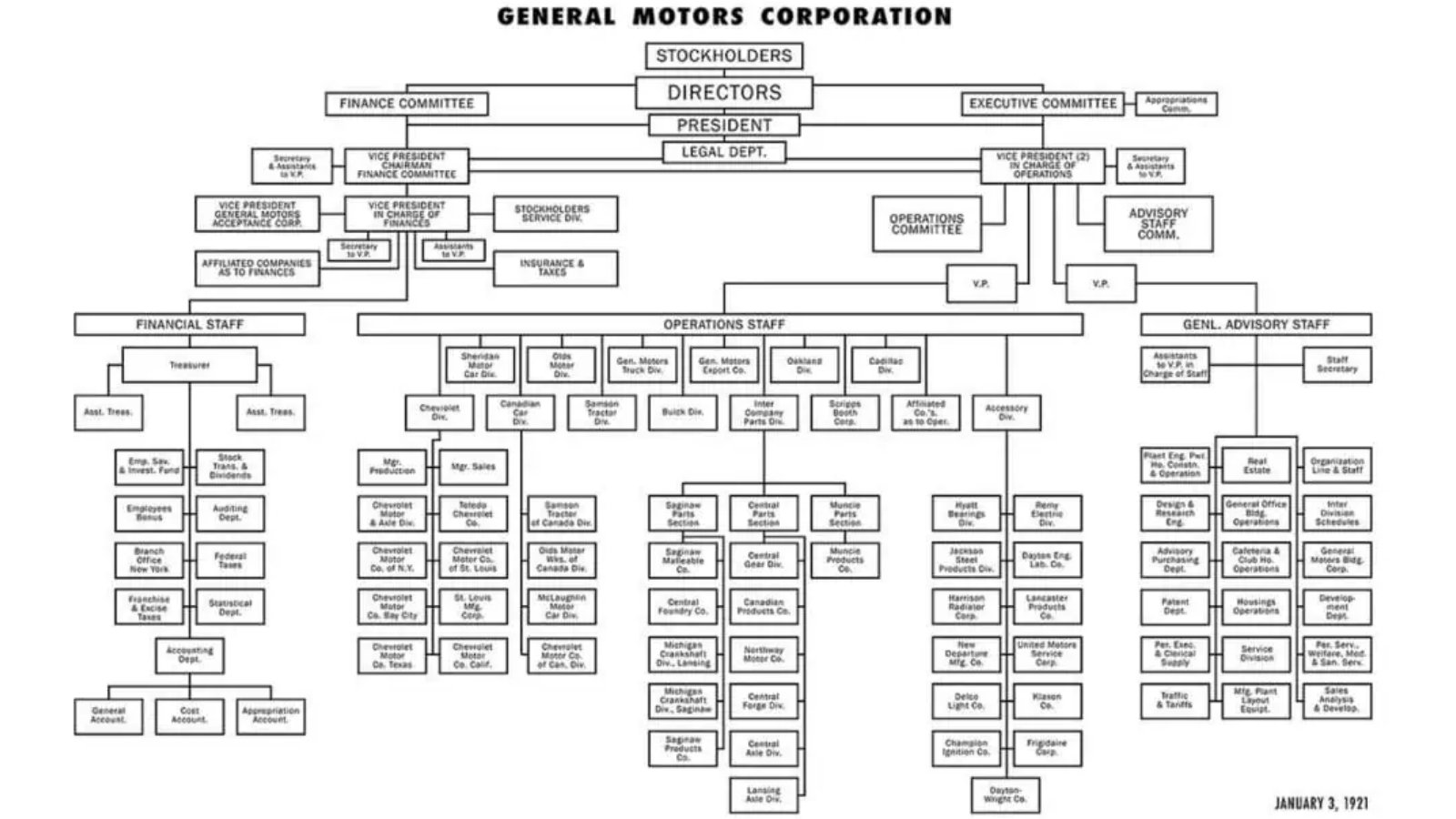
Autonomy and control: each division has management autonomy and a dedicated budget, and the chief executive keeps control through regular reports. We are talking about the 1930s and 1940s, with no computers and handwritten reporting. The centre analyses the numbers, the margins, the monthly performance: it is the first example of guided decentralisation in business history. This makes General Motors scalable without losing control: divisions can grow, merge, change target, and some brands have been closed over the years. Head office drives strategy and the allocation of capital. The first organisation chart in industrial history is General Motors'.
The lesson for SMEs: even if you are small, do you have an organisation chart? The smaller you are, the more you need one, because when everyone does everything you get chaos and confusion. Create autonomous areas, each with clear targets and numbers under control. Monitor, measure, step in, but leave the people under you a degree of autonomy. Growth equals responsibility, and responsibility plus control tools in the entrepreneur's hands equals management control. In 2025, with a market this competitive and fixed costs rising every day, if we don't position ourselves at the high end, if we don't sell at high margins and if we don't control the numbers, we risk losing money every month.
2. A brand for every purse
Sloan was the first to invent brand positioning: a brand for every purse. Ford offered a single model for everyone; Sloan segments the market with different cars for different customers. And the concept evolved: there isn't a Chevrolet brand that starts at $5,000 and goes up to $30,000, but different price bands, different brands and different products, so that the customer changes car as they advance in their career, their income grows and they want to show society they have moved up in status. These are the foundations of luxury branding that we explain on the live course Margini di Lusso. When the consumer rises in status they don't have to leave General Motors: they stay in the group by changing brand, from Chevrolet to Buick, from Buick to Cadillac, and the whole market knows that if you drive a certain brand you have a certain image. It is what Piëch did from the 1970s onwards with the identity of the Volkswagen group's brands.
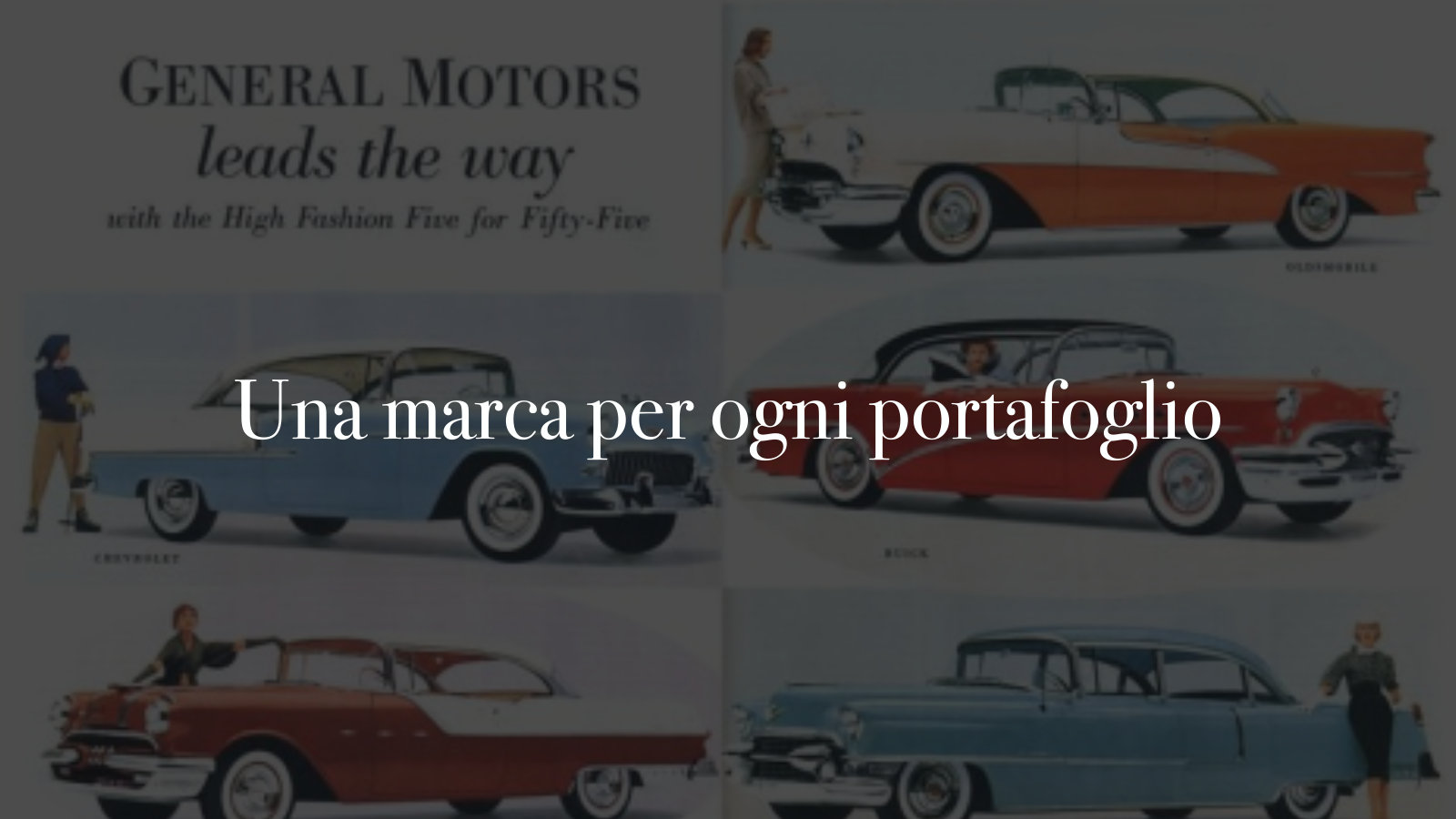
Chevrolet for the economy market, Pontiac and Oldsmobile for the mid-market, Buick for the upper segment, Cadillac for luxury. Each brand has a precise role on the ladder of perceived value. 105 years later Chevrolet, Buick and Cadillac still exist, even if over time this lesson has been somewhat lost. An extraordinary document I dug out of my archives is the first General Motors advertisement under Sloan to introduce the concept: a car for every budget and need, with the customer avatar underneath. If you have a product or service to sell, the first question is who your typical customer is, their profile, what in the jargon is called the customer avatar. Sloan put it in black and white in the 1920s: every image has a customer avatar, and every avatar has its own brand at a specific price. Chevrolet speaks to the working-class family, in an America that was industrialising. Pontiac and Oldsmobile to the emerging middle class. Buick communicates success, elegance, stability: the executive bracket. Cadillac stands for power and prestige, so much so that after the war, just as in Italy people say "you're the Ferrari of furniture", in the United States they said "the Cadillac of furniture", "of computers". The brand name had become a byword for the category.
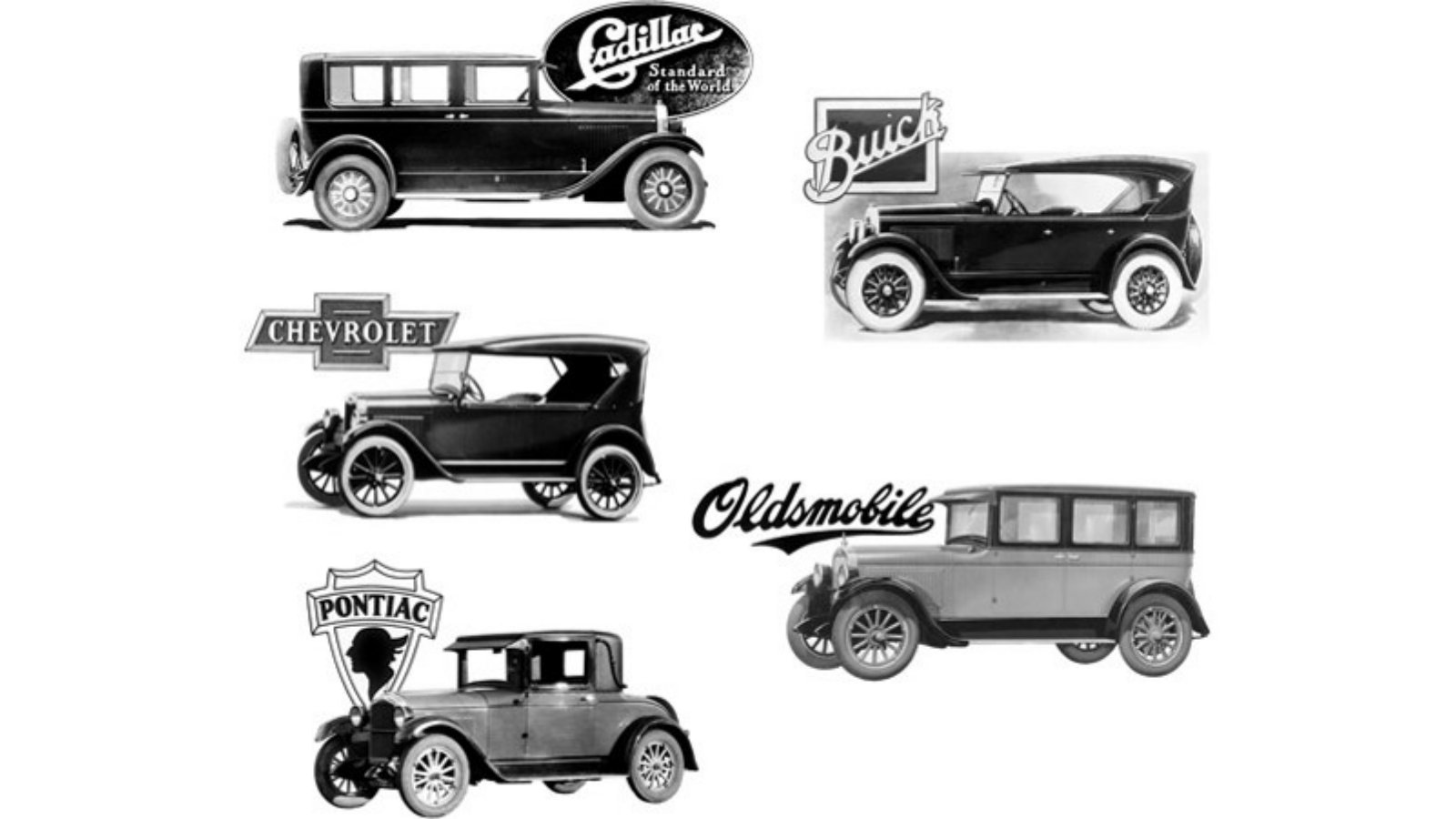
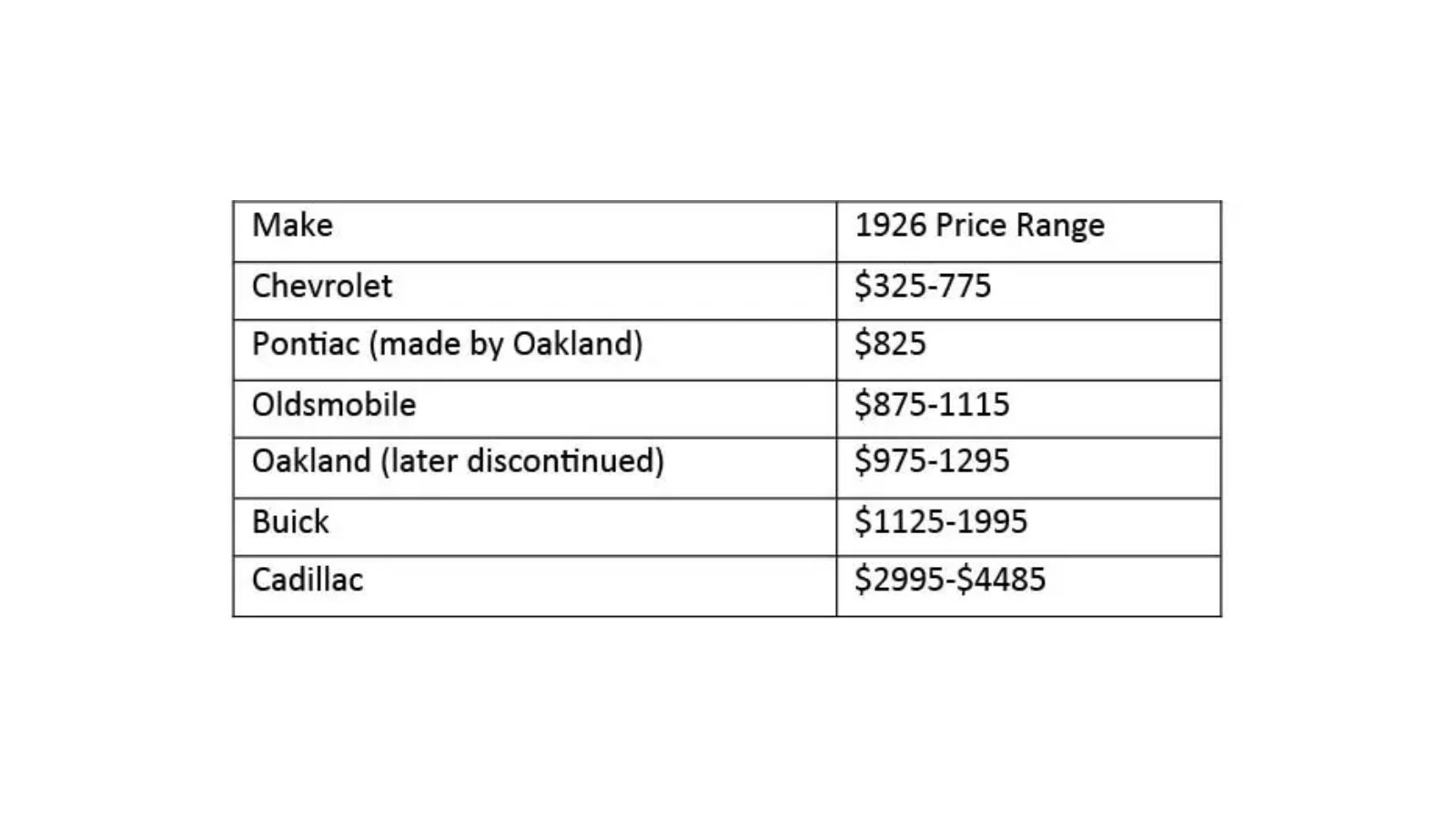
Each brand has its own style and its own audience. There is no confusion and no overlap: the customer finds their place in the General Motors universe and the whole social ladder is covered without cannibalisation. The 1926 price list proves it: Chevrolet from $325 to $775, Pontiac $825, Oldsmobile from $875 to $1,115, Oakland, later dropped, from $975 to $1,295, Buick from $1,125 to $1,995, Cadillac from $2,995 to $4,485. There is never an overlap. And Sloan wrote it in the advertising: General Motors offers 46 types of car, from $525 to $4,485, with the ladder of brands. He communicates the price too, so that consumers choose, according to income, wealth and social standing, the car that best represents them, and when they advance in their career they move up a rung. It is the status effect, one of the three effects we explain on the Margini di Lusso course, together with the bandwagon effect, jumping on the winners' wagon, and the refinement effect.
The car becomes the symbol of who you are. Buying a Cadillac means asserting your status: General Motors sells an identity. Sloan anticipated emotional branding by decades. In my career I was lucky enough to have as a client, in 2016, the president of Cadillac and vice-president of General Motors, Johan de Nysschen: I visited Cadillac's headquarters in New York, two floors overlooking Manhattan, and we talked about these subjects too. As well as studying the subject, I went to the United States to sell my products.

Overtaking Ford
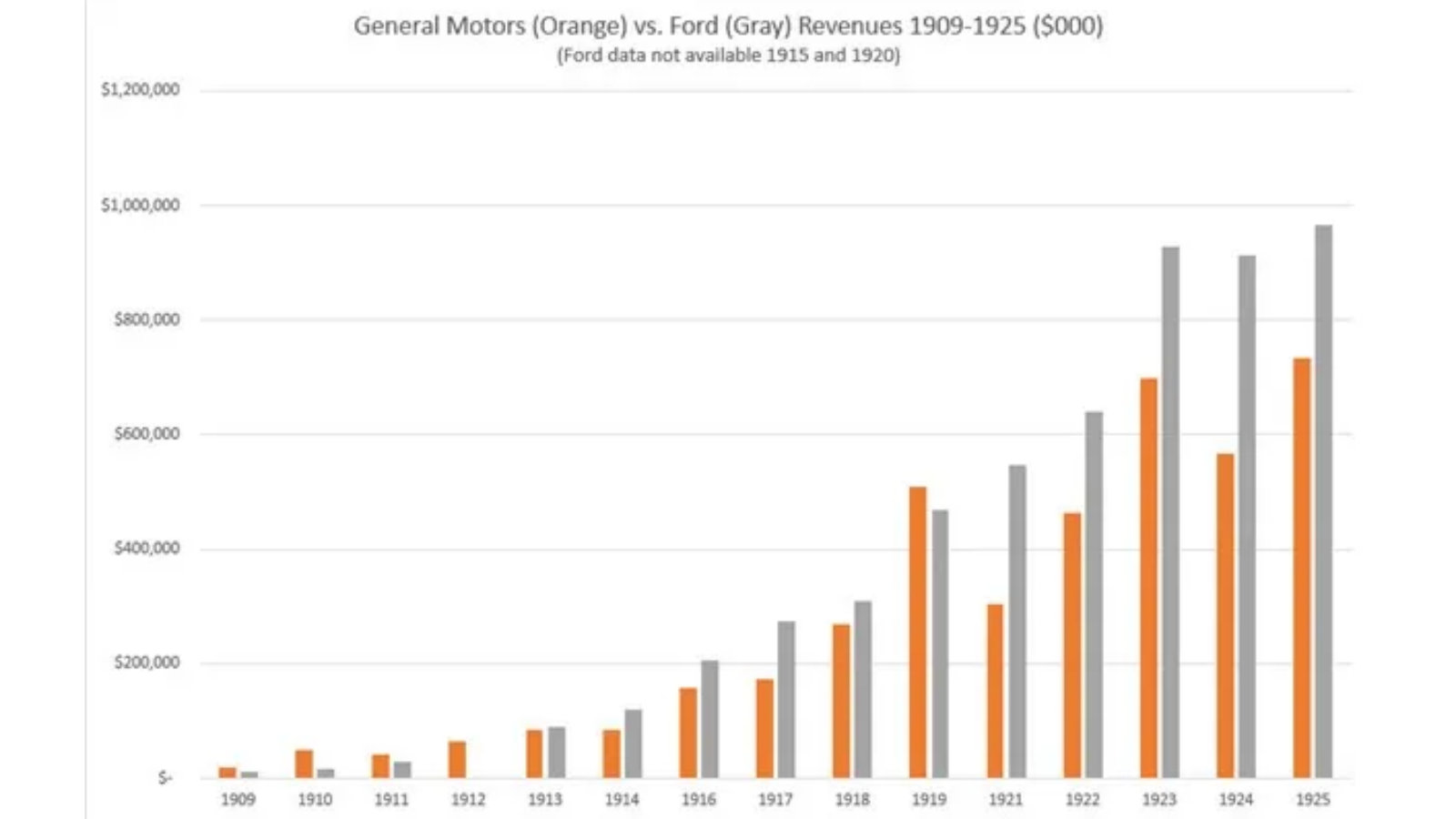
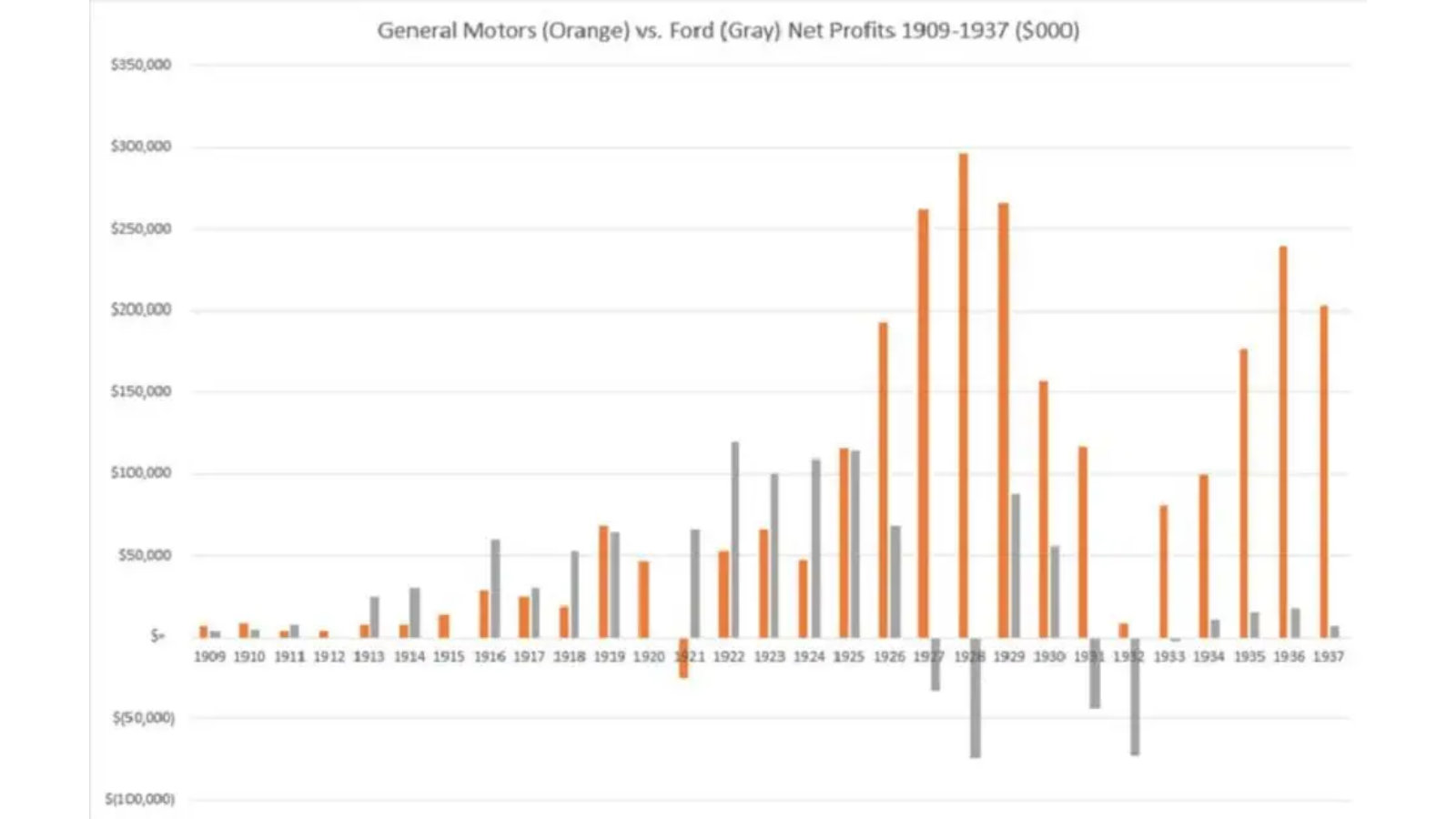
After about a decade Ford is still stuck on its single model while GM captures every segment at higher margins, creating desire, variety and continuous upgrades. From 1925, when Sloan's machine starts turning, the picture is reversed: General Motors becomes number one, Ford number two, and in 1925 number three is born, Chrysler. The difference in profit between 1926 and 1937 is stark.
The lesson: if we sell only one product we speak to only one customer, and today being a single-product company is very hard. You need to structure your offer into a range, a collection. Do you need several brands to sell it? It depends, and it has to be assessed case by case. At the high end, which splits into premium and luxury, the brand can be ascending, from premium towards luxury, descending, or focused on one or two segments. Porsche covers premium and luxury with a single brand, while in premium and luxury the Volkswagen group has Audi, Porsche and Lamborghini, each with a specific cluster. Creating several brands is only advisable with financial stability, resources to invest and a strategy that makes sense. What matters is not being a single-product company: build a ladder of offers, differentiate by price, perceived value and language, and let customers move up within your world when their status changes, without leaving it. With Sloan, the range of cars mirrors the social ladder.
3. The annual model: planned obsolescence
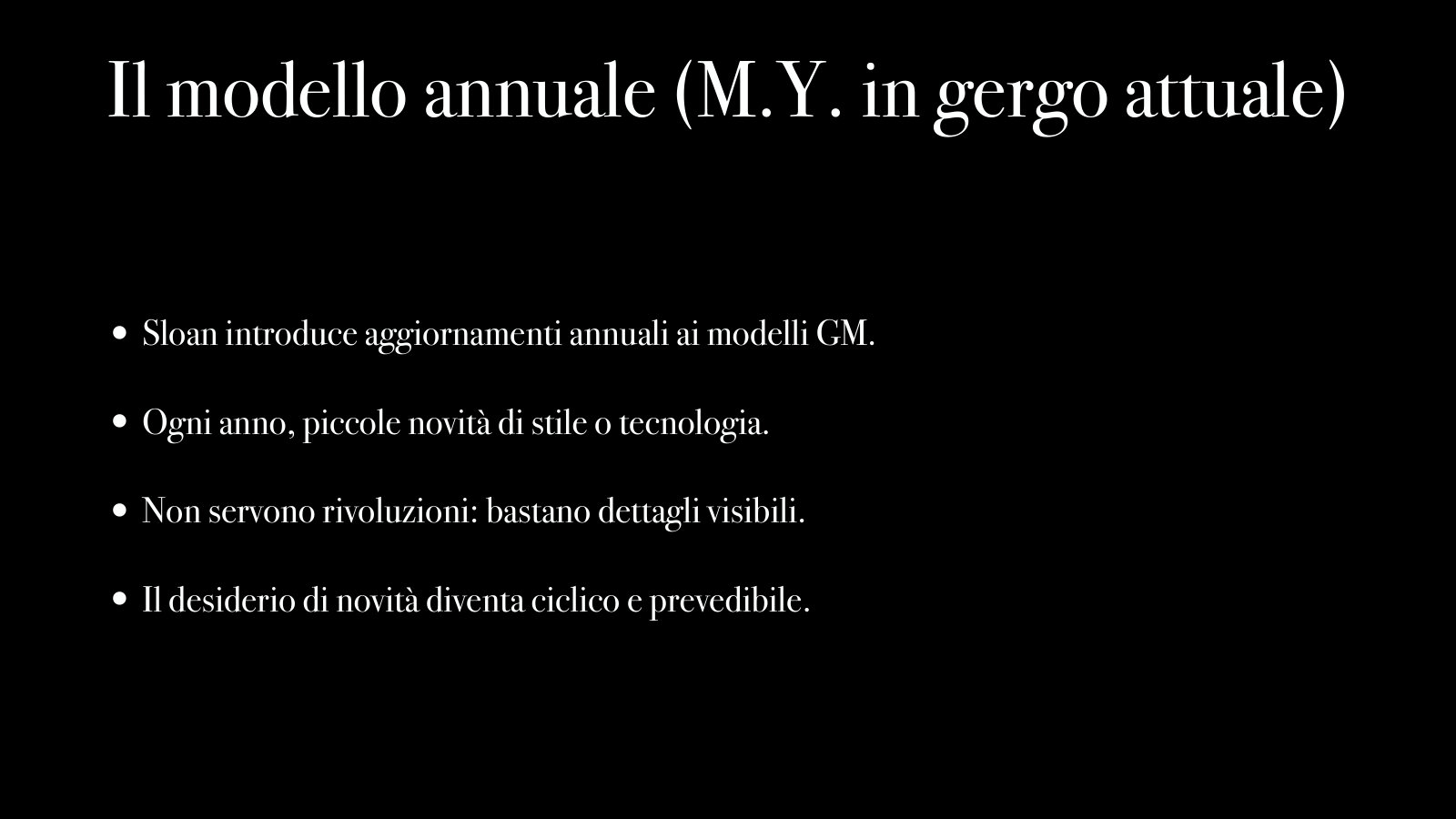
The third concept guarantees steady turnover to anyone whose product or business model allows it: the annual model, the model year, in other words planned obsolescence. Sloan was the first to introduce annual updates: small changes in style or technology, so that the press talks about the new model, customers see it on the street and want to change their car. The desire for novelty becomes cyclical and predictable. Even a car that works perfectly can become old, because new models overtake it in design, technology and prestige. The customer changes car because they want to. None of us has to change our phone or car unless it breaks: we do it because we want to tell the market we have moved up in status. Sloan institutionalises planned renewal: demand is designed, and the market is never saturated because it evolves every year.
The lesson: if you don't renew your offer, you risk being forgotten. If over the last 3 years you have sold the same products or services without ever touching the catalogue, you risk falling into oblivion. Plan regular updates, even minimal ones, and give customers a good reason to come back. Obsolescence is a mechanism of evolution that small companies need to build in too.
4. Data-driven decisions
The entrepreneur's intuition needs to be backed by a scientific basis of data analysis, for decisions that are rational, documented and repeatable. Sloan introduces a culture of constant measurement: monthly reporting, each division presenting its results at fixed intervals, analysis of sales, costs, margins, efficiency. Strategic decisions are based on those reports and the company is steered by its profitability. Data drives action, in place of improvisation and gut decisions. Every manager answers to the data, regardless of charisma, and a culture founded on accountability takes shape. It's fine to have brilliant people in the company, but within an organisation chart and measured on performance, otherwise the company becomes dependent on a single personality and when that person leaves the damage is done. We have to build a machine that makes reasoned decisions, and that applies to us entrepreneurs too: if one day we want to sell the company or step back, it must carry on with as much autonomy as possible.
The entrepreneur's dashboard
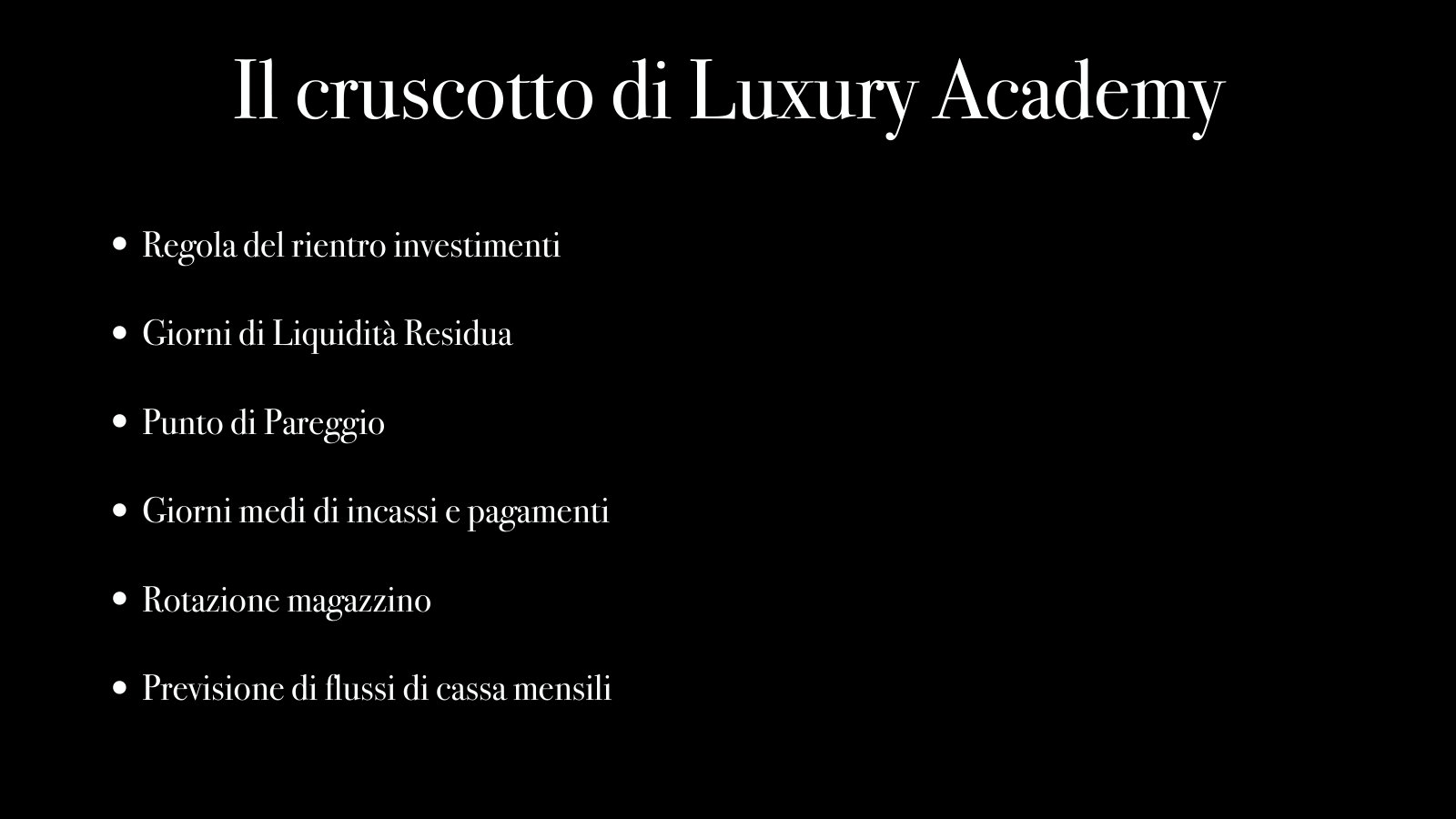
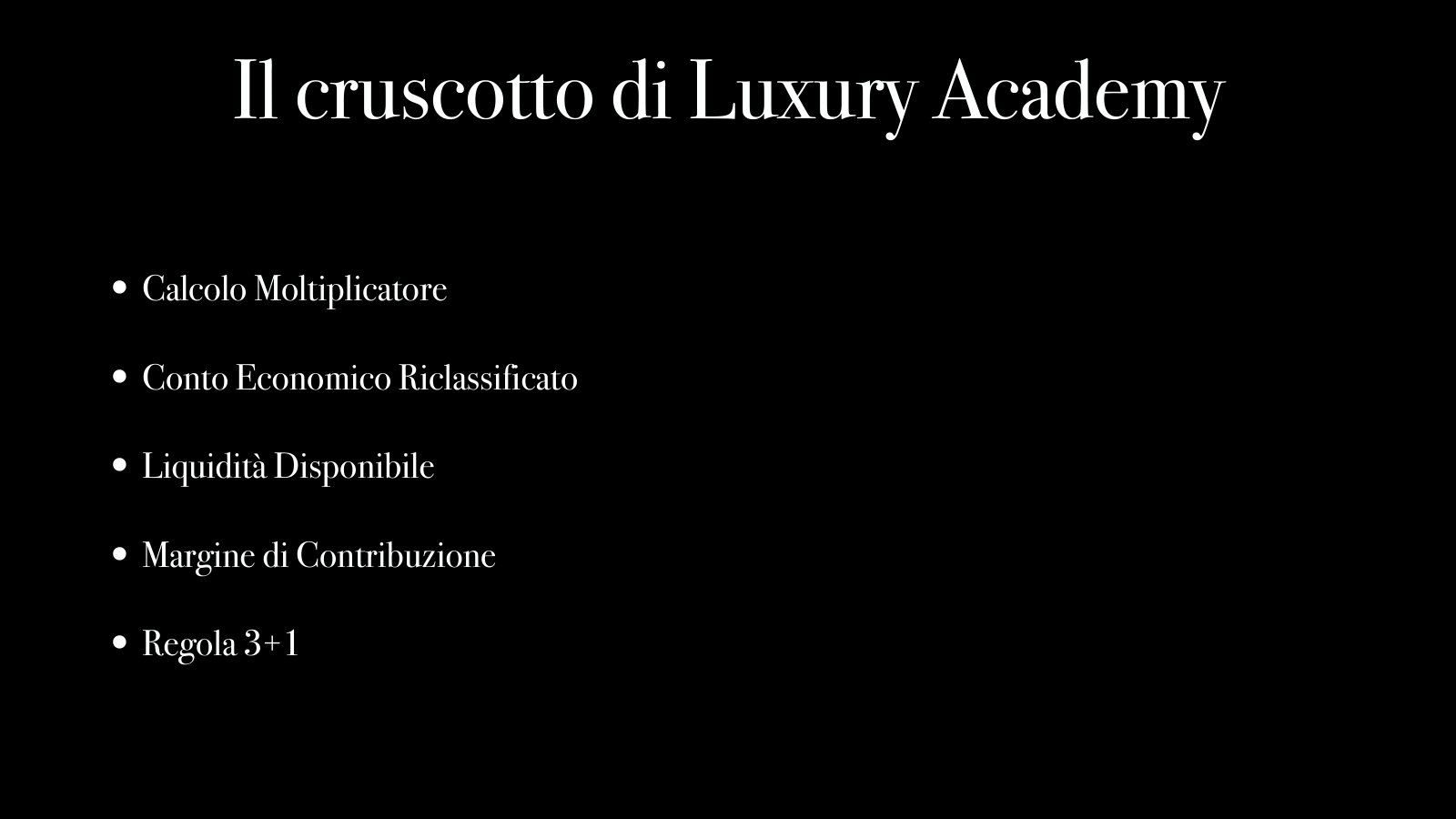
Let's stop making decisions purely on urgency and emotion: you need a dashboard that is simple but consistent, with sales, margins and costs compared month on month. The dashboard we use at Luxury Academy, which we have installed on entrepreneurs' computers during two-day workshops, has 11 items. The multiplier calculation: how much you multiply your products and services to sell them to the market, which gives you first-level margin, meaning what is left after variable costs to pay fixed costs; we teach people to sell at least 30% above the market's average price list. The reclassified income statement. Cash available at any moment. Contribution margin. The 3+1 rule, which we explain on the live courses. The investment payback rule: if I invest €35,000 in a trade fair I need to know exactly how much I have to invoice to cover that cost, which is obviously not €35,000 of turnover; it isn't a widely known rule, but without it we are driving in the dark. Days of cash remaining: if I stop invoicing, because of a crisis or a plant shutdown, how many days the company can hold out without personal funds or loans. The break-even point, the day turnover covers costs, after which everything is margin. Average collection and payment days, from which cash strategies start. Inventory turnover. Monthly cash flow forecasting. If I had to pick one, the most important is the investment payback rule. Leadership is measured by the number of correct decisions over time, and to decide well you need courage and tools. Sloan knew it and built an empire on it.
5. In-house financing
Sloan creates GMAC, a finance company controlled by General Motors. For the first time the company offers credit to the consumer: at Ford you buy the car and pay for it in full, at General Motors I give you credit through a finance company I set up myself. Sales boom. Today this is normal in medium-sized and large companies, and for our small companies too there are tools that guarantee payment to the supplier and let the customer pay in instalments. The market widens, and customers, sales and loyalty all grow.
If your product is expensive or a big commitment, help the customer buy it, especially on the first purchase. Our entry course is an executive education course, but we also offer it with instalment payments, to break down the wall of mistrust a customer has towards a new supplier. The margin stays intact and buying becomes easier. The tools are Scalapay, Klarna, Stripe, Squarespace instalments, and PayPal up to three instalments with immediate payment to the supplier. With Stripe or Squarespace the risk of waiting 30–60 days is yours, but in my experience, with more than 1,700 paying customers across courses, books and manuals, it has never happened that a customer failed to pay the second or third instalment: once the card is authorised, the payment cycle comes through, just like Netflix.
The customer wants variety
Ford offered the same model to everyone; Sloan understands that customers want to choose. GM produces hundreds of combinations of models, colours and options. Variety becomes a competitive advantage, as long as it sits within industrial planning, for manufacturers, or within planning of the value of time, for those offering tailored services. Each customer chooses the car that best represents them and the product becomes an extension of their identity: production moves from standard to scalable made-to-measure. GM sells to a mass market and lets every customer personalise their car. The lesson: stop offering one thing for everyone, segment your offer into options, packages and experiences, and let customers personalise and move up a level. Every choice you offer increases perceived value.
Structure follows strategy
When strategy changes, the organisation changes too. The strategy decided by the entrepreneur is in command, and the organisation moves in the new direction: new markets, new divisions, new managers. It is the principle of adaptation: a company that doesn't adapt disappears. When the goal changes, the way you work has to change, with new people, new roles, new tools. The first thing to do, alongside brand and marketing, which are the heart of the Margini di Lusso course, is management control: have the dashboard and use it to build your weekly, monthly and annual strategy.
Alfred Sloan's 7 lessons
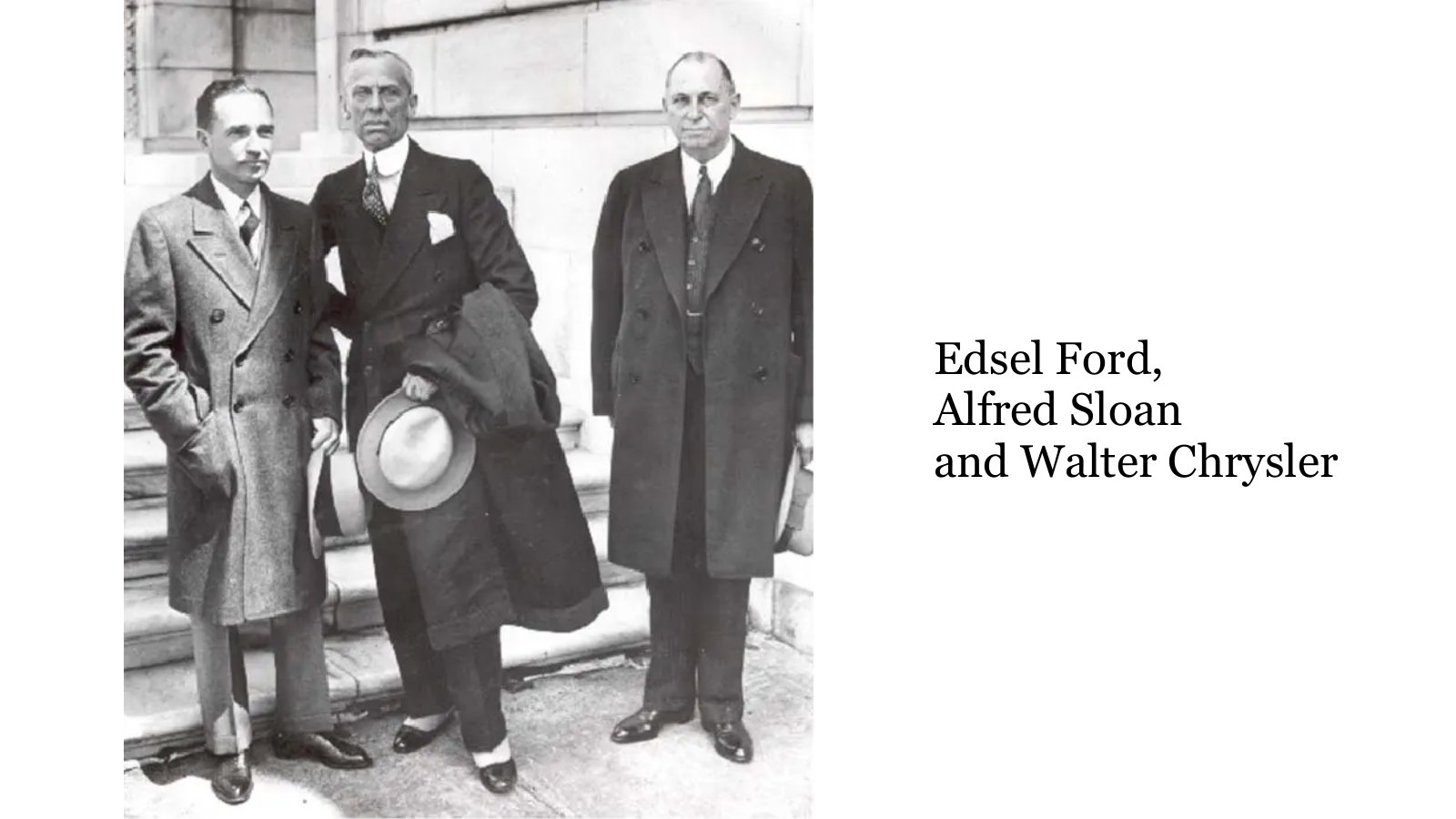
Mass production of the car was Ford's achievement; Sloan knew how to sell it better than anyone else. He was a strategic architect: he brought method to the chaos of General Motors and built a system that still works today. He must also have been an exceptional boss: GM's executives respected his fairness, his objectivity and his data-driven decisions. When Walter Chrysler, a key GM executive, left the company, Sloan helped and encouraged him to found his own car company, Chrysler, the smallest of the Detroit three. And when Henry Ford died leaving the company in difficulty, Sloan told his grandson Henry Ford II which GM executives to hire to rebuild the Ford Motor Company. There is an extraordinary photo of Edsel Ford, Alfred Sloan and Walter Chrysler together: the big three, and all of them had taken advice from Sloan.
- Structure beats talent. You need a system that works every day.
- Every brand must speak to someone. Create differentiated offers for different customers.
- Give freedom, but keep control. Operational autonomy with clear numbers and regular reporting.
- Renew to stay relevant. Update your offer periodically.
- Steer by the numbers. Install the dashboard and make decisions on real data; instinct helps, but with measurement you have a solid direction.
- Help the customer buy. On the first purchase, break down the wall of mistrust by making payment easier, without losing margin and while guaranteeing collection.
- Change the structure when the goal changes. Every phase of the company needs a new organisation. Don't wait for disaster.
Frequently asked questions
What does a car for every purse and purpose mean?
A car for every budget and need: the motto with which Sloan segmented the market into brands with price bands that did not overlap, from Chevrolet to Cadillac, so that customers moved up a brand as their status grew without ever leaving General Motors.
What is Alfred Sloan's book?
My Years with General Motors, around 500 pages, published in Italian by Il Sole 24 Ore. Peter Drucker called it the best book on business ever written by a man who actually ran a company.
What is planned obsolescence according to Sloan?
The annual model: regular updates to style and technology that make a product that still works feel old. Demand is designed: the customer changes because they want to.
What can an SME take from the Sloan method?
An organisation chart even when small, a ladder of offers across several products, a management control dashboard with margins, cash and break-even point, periodic updates to the offer, and instalment payment tools that make the first purchase easier without reducing the margin.
One live webinar a month.
One topic, questions from the business owners who join, answers without sales slides. It's free and in Italian, and it's the simplest way to get to know us.
See the next webinar →