



Tavares, the cost cutter: how Europe's best-paid manager sank Stellantis in 24 months
In 2023 Carlos Tavares was the man of records: 18.6 billion in profit and Europe's best-paid manager. 24 months later he was out, after the biggest loss in Stellantis's history. In this story I retrace the rescue of PSA and Opel, the merger with FCA and the 4 mistakes of the Dare Forward 2030 plan, to arrive at the question every entrepreneur asks when looking at costs: can I cut this?
We need your consent to play it: YouTube uses cookies that may profile what you watch.
Cookie preferences- Cut the fat, not the muscle. The fat is the costs the customer doesn't see. The muscle is what they pay you for.
- Don't trust record figures if they depend on external events. Ask yourself what you'll do when those events end.
- Don't bet the whole company on something you don't decide. Focus on what you control: positioning, product, customers.
- Brand identity is worth more than you think, but you don't see it in the accounts. Find out why customers choose you and protect it.
- When the customer and the management software say two different things, the paying customer is right.
The best cost cutter in the world
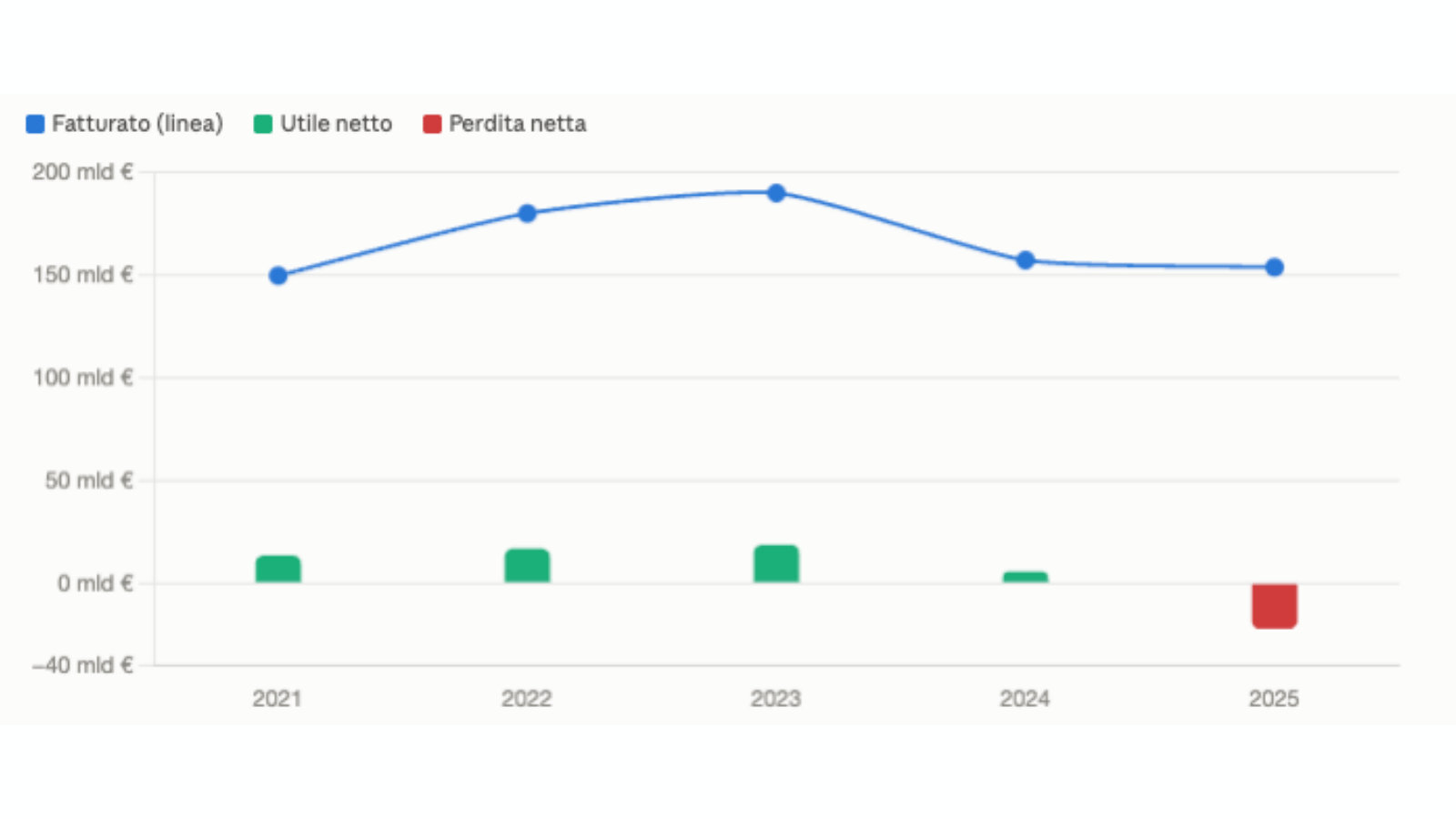
There's a man who saved two companies everyone had given up for dead. The papers called him the best manager in Europe. In 2023 he runs an empire of 14 brands and posts the highest profit in its history: €18.6 billion. The method seems perfect: cut, simplify, standardise. 24 months later, on similar revenues, that same empire posts the first loss in its history, 22 billion.
This is the story of the most dangerous question every entrepreneur asks when looking at costs: can I cut this? Carlos Tavares answered it badly, and the bill arrived 3 years later. The way you go from triumph to disaster without changing anything applies to any company, from the multinational to the SME.
Who Carlos Tavares is
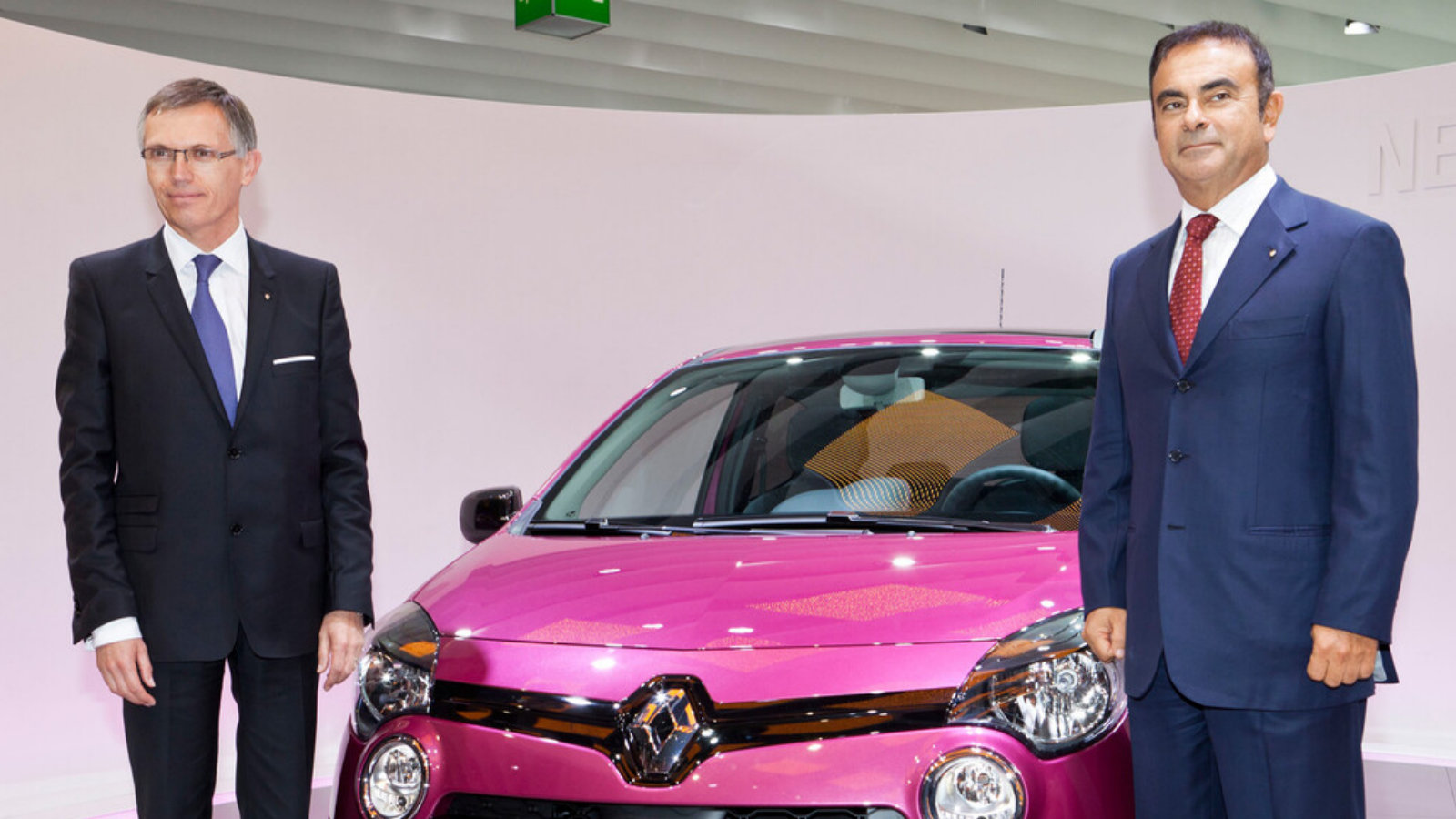
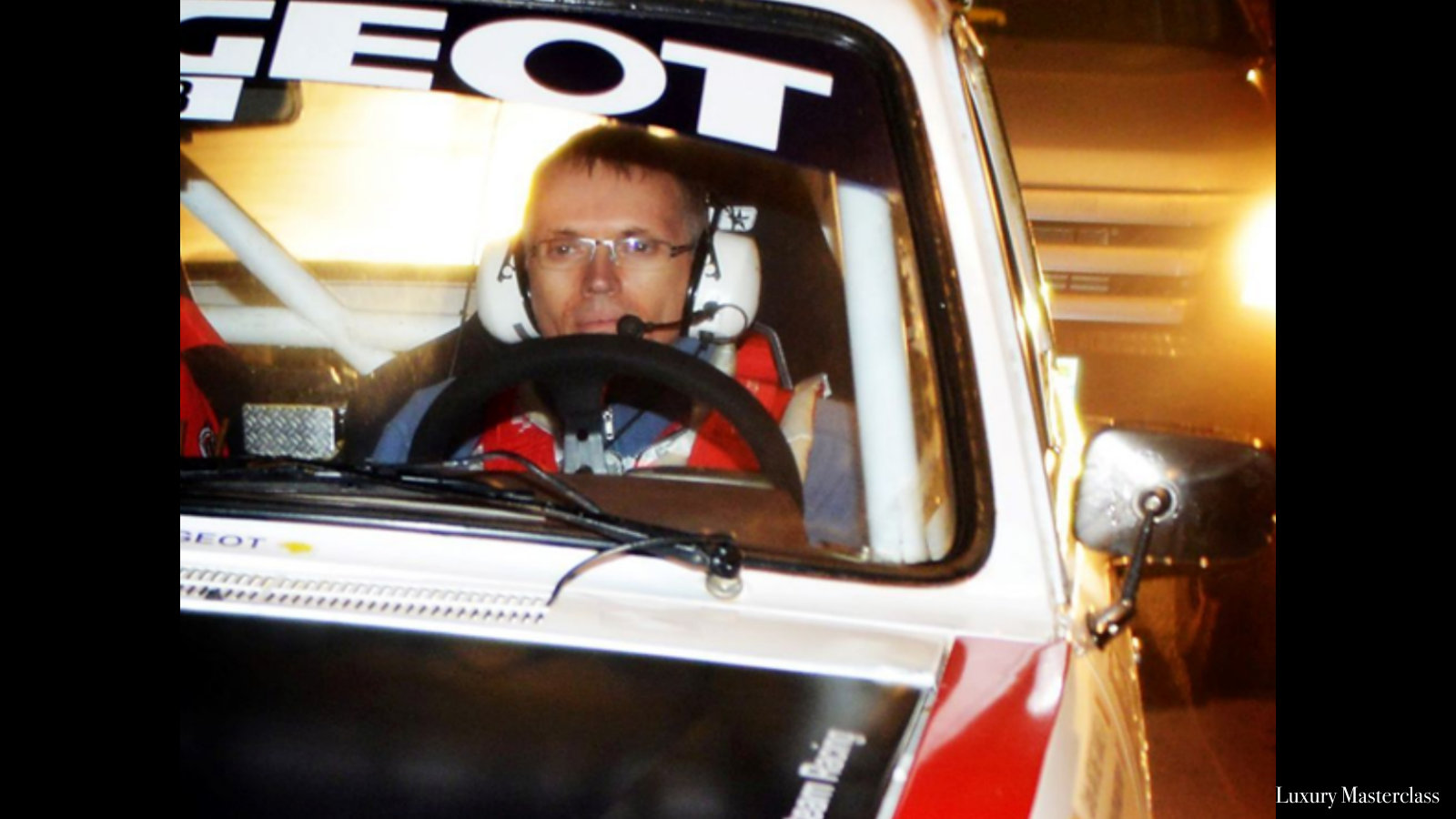
Tavares is a test engineer, and a good racing driver too, who spent 32 years at Renault until he became Carlos Ghosn's number two. At some point that's no longer enough: in 2013 he tells Bloomberg he wants to run a car maker on his own, even naming General Motors. Renault pushes him out within weeks. The man's character is already clear: ambition, zero diplomacy.
2014: PSA in crisis
Meanwhile the other historic French car maker has gone into crisis. It's 2014: the PSA group, Peugeot and Citroën, has racked up 7 billion in losses in 2012–2013 and is raising around 3 billion in new capital. The French state and the Chinese manufacturer Dongfeng each take a 14% stake and appoint Tavares chief executive.
The turnaround plan Tavares draws up at PSA becomes his signature: he'll repeat it in the acquisition of Opel and then in the merger with FCA. And it was the right plan for that moment in history. In 2014 the sword of Damocles of the European Green Deal, born in 2021, didn't exist yet, and the obligation to electrify the range by 2035 was a long way off.
The Tavares method: the rescue of PSA
Tavares's diagnosis is simple: we sell 3 million cars and lose billions. The company chases volume and buys it with discounts, short-term rental sales, pre-registered cars, dealers forced to self-register vehicles to hit the numbers. It's all turnover that destroys margin. The cure is called pricing power: defend the margin at all costs, even if it means selling less. Every car has to be profitable.
On the production side: fewer models, better made. The group's range goes from 45 to 26 models, spread over two platforms: CMP for small cars, developed with Dongfeng, and EMP2 for the mid-to-upper segments. The brands are sharply separated. Peugeot becomes the upmarket mainstream brand, Citroën the popular brand of comfort and simplicity, and DS is born, spun off from Citroën, meant to be France's answer to German premium, a goal it never achieved. Each brand has a positioning, a pricing and a customer.
The break-even point comes down, and cost discipline is everywhere: plants running at full capacity, wages frozen under a pact signed with the unions, stocks cut because finished-goods inventory burns cash, centralised purchasing. And the cars are attractive too: in 2014 the 308 wins Car of the Year. The plan set for 2018 is achieved in 2015, 3 years early, reaching 5% net profit on turnover.
The Opel coup
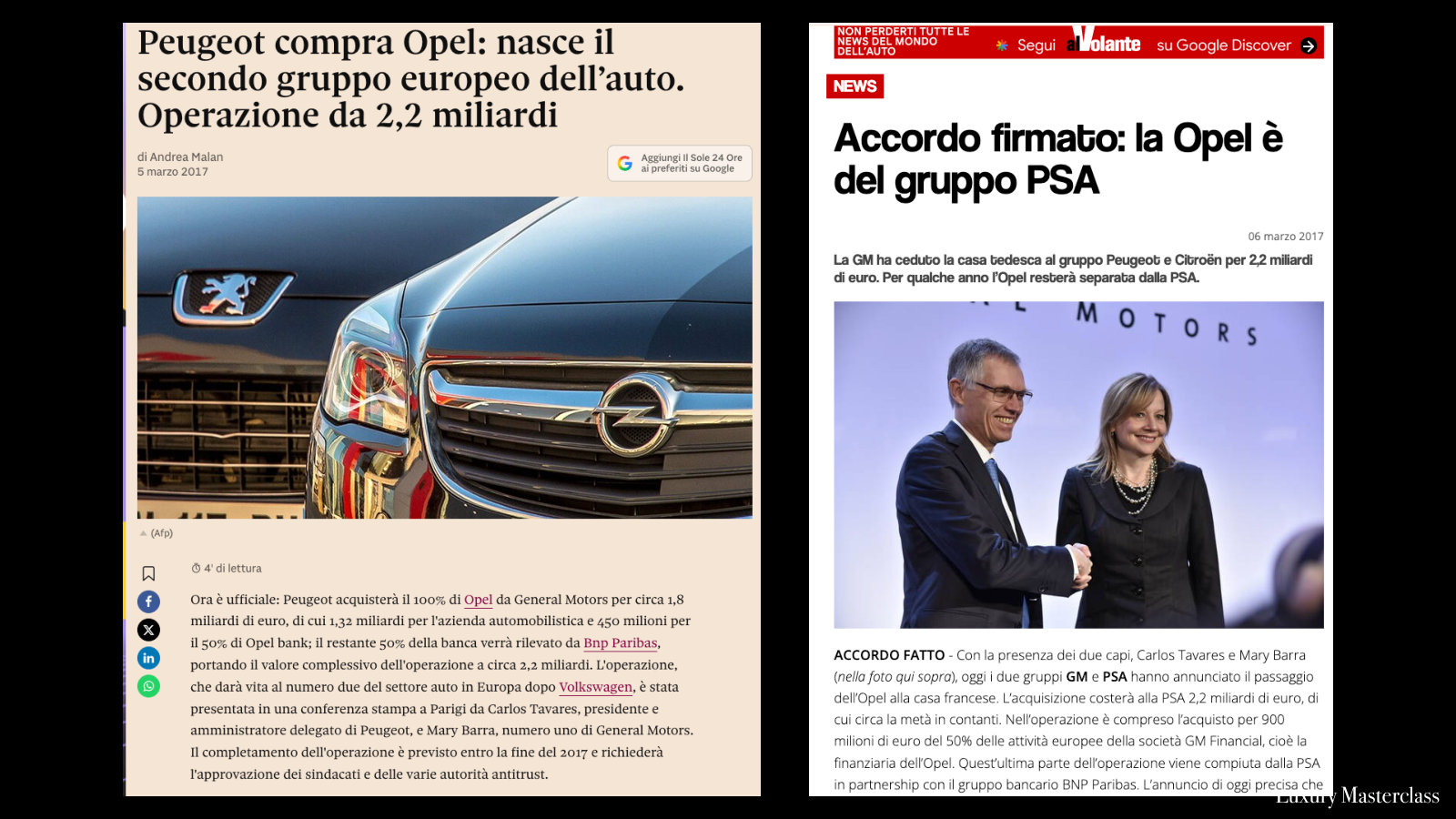
Against this backdrop Tavares tries to widen PSA's reach, not through organic growth but through acquisitions. The sick man of Europe at the time was Opel: owned by General Motors, loss-making since 1999, a dead weight GM couldn't wait to get rid of. PSA buys it for 1.3 billion and in 2018 immediately brings it into profit, after about 20 years in the red, applying the PSA plan under a German flag.
The German-engineered platforms are scrapped and Opel's entire future portfolio migrates to PSA bases: from 9 platforms to 2, from 10 engine families to 4. The Grandland on EMP2 as early as 2017, the Corsa on CMP in 2019, the new Mokka on CMP in 2020. On labour costs, 6,000–7,000 voluntary departures in Germany without compulsory redundancies, and 2,000 engineers at Rüsselsheim transferred to the French company Segula.
It's to his credit, because a company that loses money doesn't survive in the medium to long term. But the other side of the coin is that Opel completely loses its German product and engineering identity, and volumes fall. Tavares never cared much about volume: what interested him was the margin on each unit sold. This pattern, brands losing their identity, would repeat itself and get worse at Stellantis.
The turnaround in figures
Thanks to this policy PSA sails into the Covid year: an operating margin of 7.7% in 2018 and 8.5% in 2019, and in the pandemic year it stays comfortably in profit with 2.2 billion, while its competitors break even or lose money. On the eve of the merger PSA is probably the most profitable mainstream car maker in Europe relative to revenue.
Meanwhile at FCA
On the Italian-American side, Fiat Chrysler Automobiles, born from Fiat's acquisition of Chrysler, Sergio Marchionne in 2015 gives analysts the speech that went down in history, Confessions of a Capital Junkie: the car industry burns too much capital, consolidation is inevitable, whoever stays alone dies. That's where the search for a merger begins. The first attempt is with General Motors, which Marchionne sees as a strategic partner, above all for the United States. But Mary Barra won't even hear of it and the deal falls through.
On 25 July 2018 Marchionne dies suddenly in Zurich. After a brief interregnum FCA chooses Mike Manley, the Jeep man, as chief executive to bridge the way to the next merger. The group is in very good health, with around 7 billion in pre-tax profit, but with a detail the markets see perfectly well: 80% of profits come from a single geographical area, the United States, and from two brands, Jeep and Ram. Europe is just staying afloat: the Fiat range is very old and has never been renewed, and the relaunch of Alfa Romeo on the Giorgio platform of the Giulia and Stelvio cost billions without sales paying it back. The cash position is sound, partly thanks to disposals such as Magneti Marelli, but the drawers of new models are empty. A European partner is needed.
John Elkann takes charge and knocks on Renault's door. A memorandum is signed for a merger of equals, but within 15 days the French government, which owns 15% of Renault, stalls and asks for guarantees. Ten days after the announcement Elkann withdraws the offer, saying the political conditions for a successful merger don't exist in France. That's how the deal with PSA comes about. Tavares and Manley meet, but it's Elkann who closes the negotiation. The announcement comes on 31 October 2019, the binding agreement in December: 50% to PSA, 50% to FCA. FCA was richer and looked better, so its shareholders receive a special dividend of 5.5 billion.
16 January 2021: Stellantis is born
Tavares becomes chief executive with full powers and John Elkann, representing the largest shareholder Exor, chairman. Stellantis is born on 16 January 2021: the world's fourth-largest group, as it still is today, with about 400,000 employees, 14 brands, 30 plants, and three main markets across Europe, North America and South America.
Tavares's promise is the same business plan already seen at PSA and at PSA plus Opel: centralised purchasing, a single purchasing office for 14 brands that squeezes suppliers, with relations starting to get tense, and total convergence of platforms and engines in Europe onto PSA's.
The record years: a stroke of luck
The success of Stellantis's first 3 years also comes from external factors: the chip crisis of 2021–2022, Covid, the money supply and inflation, the war in Ukraine. Car prices take off and Tavares rides the wave, sending list prices sky-high: little supply, no discounts, the mix pushed towards high-spec versions. In North America margins exceed 16%, made with Jeep and Ram. A stroke of luck that swells the company's profits and validates the method beyond its merits.
The black swan: the European Green Deal
As in every company, the black swan arrives. Here it's the European Union's Green Deal, born in July 2021, partly in the wake of the Volkswagen scandal over rigged diesels in North America. The EU rules that from 1 January 2035 all cars registered in Europe must have zero CO2 emissions. Petrol, diesel, hybrids and even plug-in hybrids become unsellable by law. The only technologies allowed are electric and hydrogen, which hardly anyone buys.
From there each manufacturer sets its own strategy. Some, like BMW, develop two complete ranges in parallel, combustion, hybrid and electric, so as not to lose customers. And some, like Stellantis, embrace the shift completely without even believing in it.

Dare Forward 2030: the cardinal error
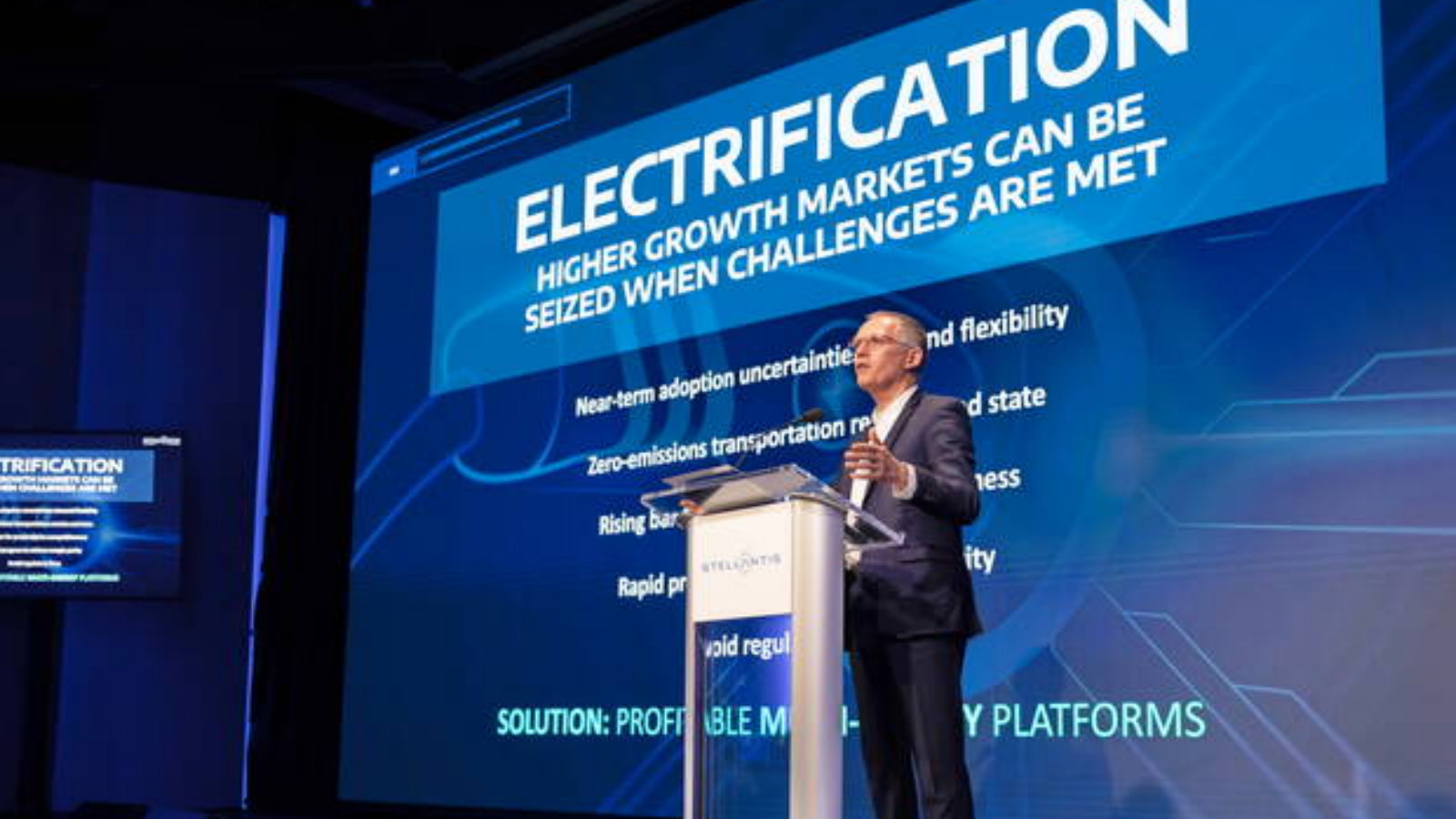
The plan of 1 March 2022, Dare Forward 2030, is Tavares's cardinal error, the one that ended his career. 100% electric in Europe, 50% in the United States, where there was no obligation at all, 75 electric models, 5 million electric cars produced a year, revenue doubled to 300 billion, net zero emissions from 2038. In the plan's official slide, brands such as Maserati and Alfa Romeo will sell only electric from 2030, on shared Stellantis platforms, small, medium and large, with maximum synergy between brands.
The same day, on the same stage, Tavares contradicts himself. He says electric mobility was decided by governments, that the group can't express its own opinion but only be competitive, that it could have bet on mild hybrids but will adapt to full electric. He knew, and he staked the entire product range on a bet he said he didn't believe in. This is where the mistakes that led to his ousting within 2 years come from.
Mistake 1: the single engine
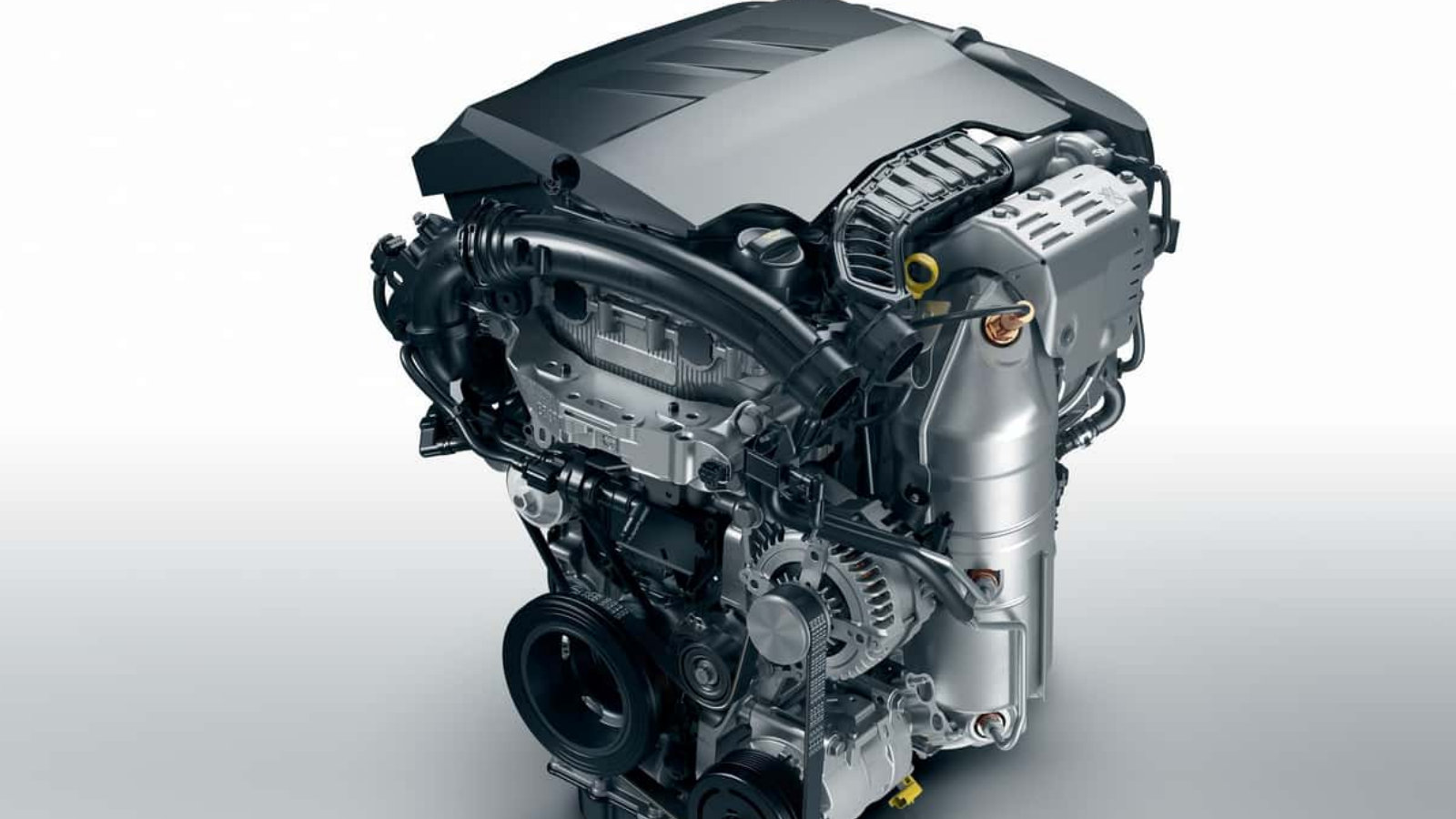
The hidden consequence of going all-in on electric is that, if the future is only electric, developing new combustion engines is wasted money. So the European range of 6 brands converges on a single bridging engine: PSA's 1.2 PureTech three-cylinder, designed in 2012, fitted to all the new Peugeots, Citroëns, Opels, DSs, Fiats, Jeeps and Alfa Romeos. FCA's engine know-how, the Fire and Firefly engines, is shelved. For the accounts it's perfect: one engine, maximum scale, minimum costs. But one engine is also one point of failure for 20 models.
The failure comes. That engine had a timing belt running in oil instead of a chain, and the belt disintegrates. An estimated 500,000-plus owners affected, class actions opened in France and Spain. The group is forced to offer a 10-year or 180,000 km warranty and a European refund platform. In 2023 they redesign the engine; by 2026 it has been completely remade. The saving on the bill of materials has turned into a reputational and legal cost running into billions, spread across all the brands that shared that engine. Beyond the financial damage, the damage to the brand's image is incalculable.
Mistake 2: carbon-copy cars
The second mistake, to maximise cost cutting, is to take shared platforms to the extreme. The concept itself isn't new: Sloan invented it at General Motors in the early 1900s, Ghidella did it with the platform shared by the Alfa 164, Lancia Thema, Fiat Croma and Saab 9000, and the Volkswagen group does it with the Golf and the Audi A3 on the same floorpans. The problem is that each of those cars had a character, an identity.
Stellantis takes the concept to the limit. Look at the Peugeot 2008, Opel Mokka, Jeep Avenger, Fiat 600 and Alfa Romeo Junior: five historic brands, and it's the same car. Not only are the mechanicals identical, but the same roof and the same pillars are fixed to cut costs, so the design is castrated too: the proportions are exactly the same.
Mistake 3: the electric dogma meets the market
The next mistake concerns the premium segment. Brands such as Alfa Romeo and Maserati in Europe, and Dodge in the United States, are identified with the combustion engine: the roar of the V8 for Maserati, the four and six cylinders for Alfa Romeo. Switching overnight to an all-electric range meant customers left the new models on the forecourt, and stopped buying even the combustion ones.
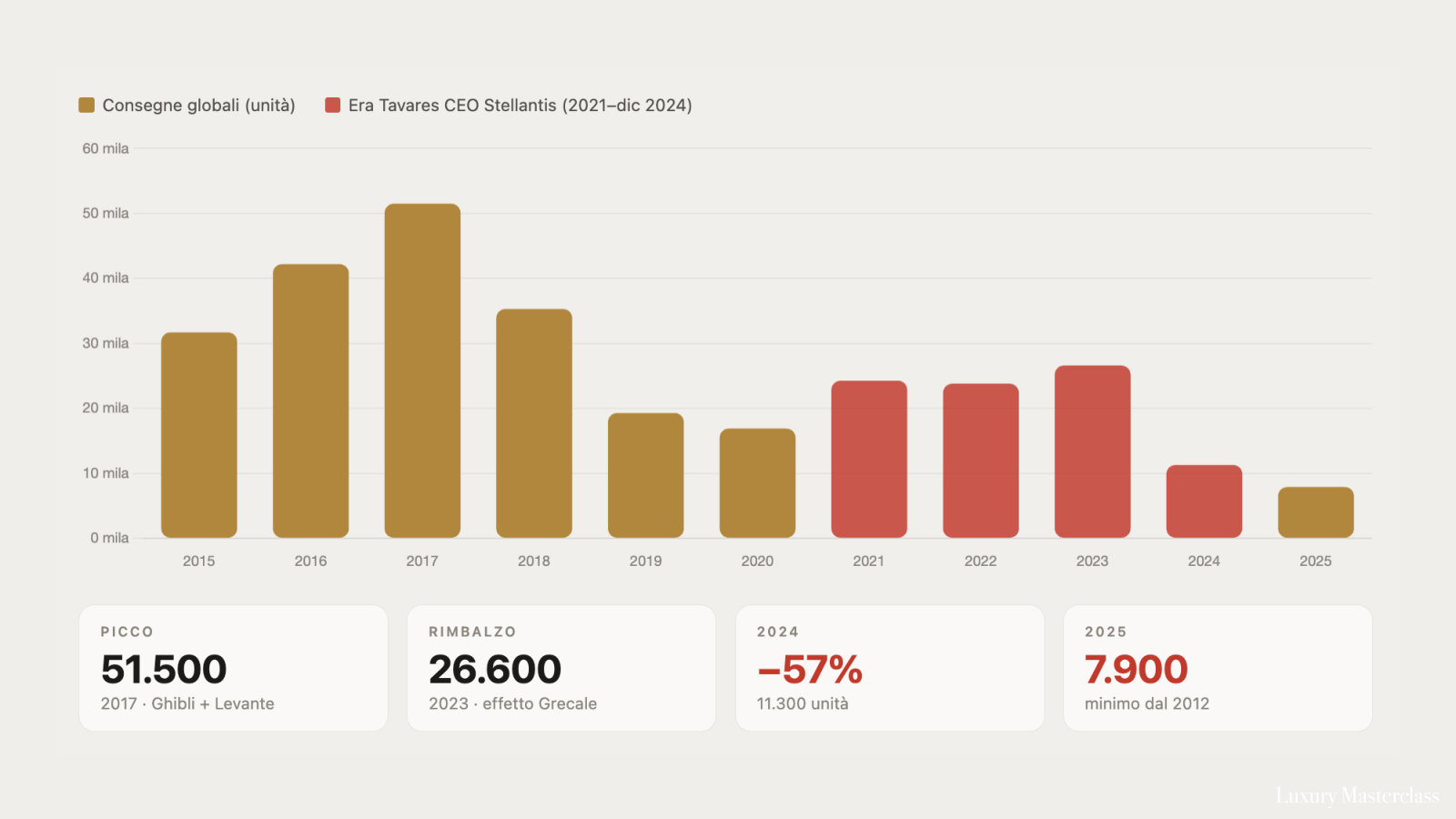
Maserati is the textbook case. In 2023 the V8 is buried and the electric Folgore range is launched on the tailwind of the plans, with prices that are too high. So that it won't look overpriced, combustion list prices are raised to the same level as electric. The result: neither electric nor combustion sells. The GranTurismo, GranCabrio and Grecale Folgore fall well short of expectations, the MC20 Folgore is cancelled for lack of demand. Maserati's deliveries go from 50,000 units in the FCA era, with models such as the GranTurismo V8, Levante and Ghibli, to 7,900 in 2025.
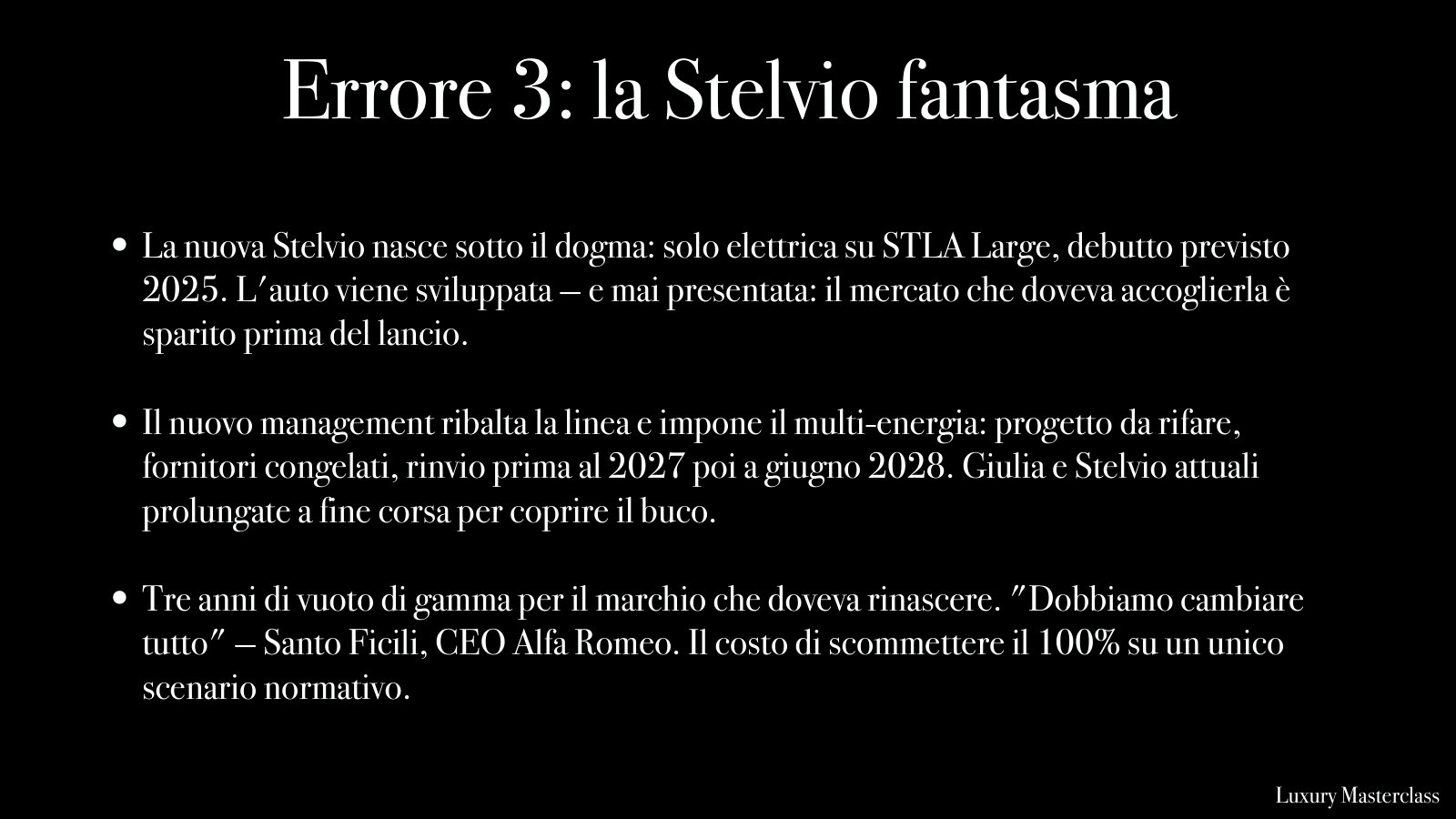
For Alfa Romeo it went even worse, because Alfa doesn't only have luxury models but also premium and near-premium ones. The chief executive at the time, following Tavares's lead, kept repeating that the combustion engine was doomed from 2027 and that there was no going back on electric. The new Giulia and Stelvio, electric-only on the STLA Large platform, had already been road-tested, with the production line ready. They were never presented: for fear of a flop, the new management preferred not to launch a car that was ready and to redo the project as multi-energy, postponed to 2027–2028. Three years with a gap in the range for the brand that was meant to be reborn. Meanwhile loyal customers go to other manufacturers, such as BMW, which developed combustion, hybrid and electric in parallel. And in the car industry reaction time is long: “we have to change everything” said today shows up on the market in 3–5 years.
Mistake 4: not understanding America
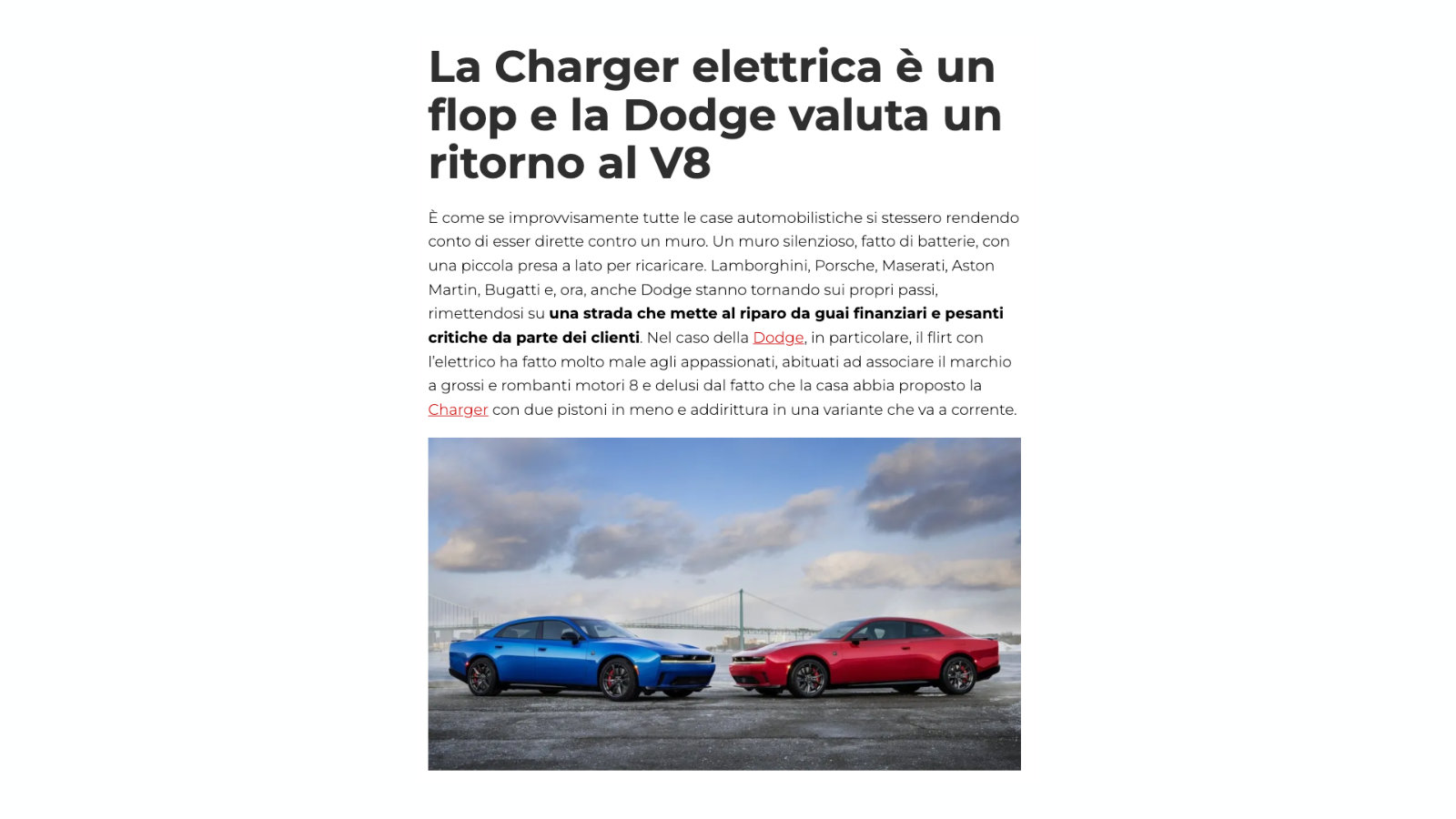
The truly cardinal error was never understanding the American market, out of arrogance, ego and a degree of ignorance. The folly is thinking you can sell Americans electric Dodges instead of V8s. Dodge has lived on roar, torque and muscle identity since 1966. I've been to the United States dozens of times on business and I can assure you that Dodges sell above all in the Midwest, exclusively with combustion engines, ideally V8s.
The combustion Charger and Challenger are dropped at the end of 2023, before the electric one was ready. The new electric Dodges, launched in grand style, sit unsold on the lots. The management that succeeded Tavares brought Dodge's long-time boss out of retirement, and the first thing he did was put V8s back under the bonnets, not only of Dodges but also of Jeeps and Rams. So much so that today Stellantis is growing by 28% in the United States. You just have to make what the market wants to buy.
You should never force a company decision on the consumer because it's convenient to produce and because the Excel file says it makes more money. If you don't listen to the consumer and make products they don't want, the plan looks wonderful on paper, but the product stays unsold in the warehouse.
2024: the year of the collapse
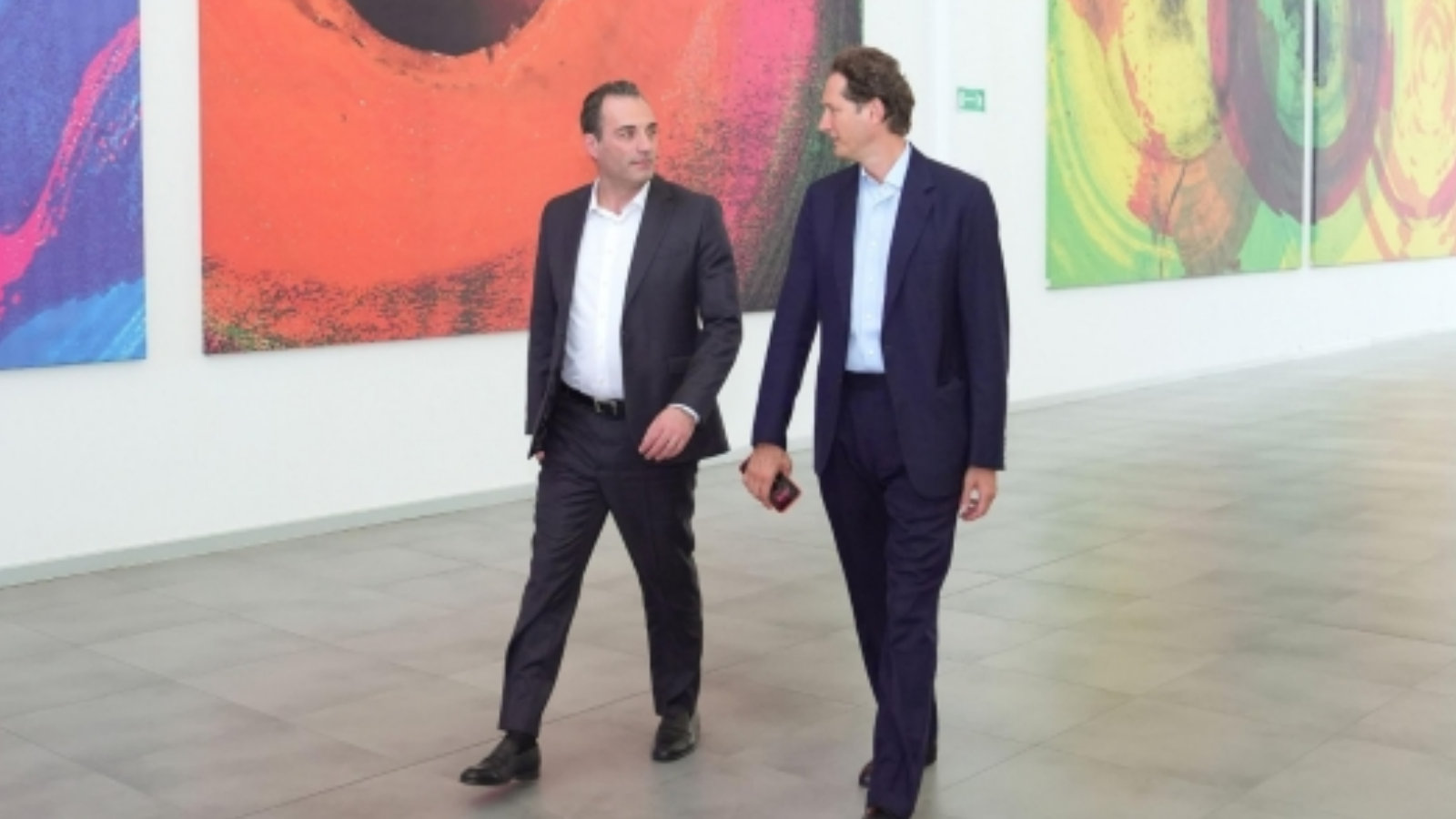
In 2024 the United States declares war on Tavares. Not just the unions: the dealers too, the distributors of the product, write open letters calling for the chief executive's removal for being unable to manage the American market. The share price falls 42% in a year, profit drops to 5.5 billion, 70% down on the record year. The board, led by John Elkann, simply acknowledges the inevitable.
1 December 2024: the ousting
On 1 December 2024, a Sunday, the resignation comes with immediate effect. Elkann's official wording is a misalignment between the board and the chief executive. The political weight of the fall is such that Elkann takes over on an interim basis and meets the President of the Republic, Mattarella, and Prime Minister Meloni.
After Tavares: the return of the FCA men
The change of course brings the FCA men back to the helm of Stellantis. Today 9 of the 13 members of the leadership come from FCA, headed by Antonio Filosa, a Neapolitan born in 1973 who spent his whole career first at Fiat and then at FCA, particularly in South America and North America, so much so that his main office remains in Detroit. The new plan just presented provides for 10 billion of investment focused on the group's American brands and a reorganisation of the European brands, making the most of what exists: combustion engines and new hybrids alongside electric.
European production still lives under the sword of Damocles of 2035, now no longer at 100% but at 90%, and under the fines linked to cars deemed polluting. The paradox is that anyone making cars in Europe gets fined, and the more cars they register the more they're fined, unless they make electric cars, which the market doesn't want because 80% of customers buy hybrids or petrol.
The final bill: the 2025 accounts
The final bill for Tavares's legacy is around 25 billion in the red. The 2025 accounts close with a net loss of €22.3 billion, the first in the group's history, with 25.4 billion in exceptional charges: the accounting cost of dismantling the previous strategy. Even without the exceptional items the group made an operating loss, against 8.6 billion in profit the year before. The market took 14 months to put a price on Tavares's legacy: more than the group had earned in its best year ever.
Lessons for business owners
Tavares is no amateur: he spent decades climbing to the top of companies, and his first three plans, Peugeot, Opel and the start of Stellantis, went very well. His problem was carrying on with the same plan when going from 3 brands to 14, and from 14 brands in Europe to a group whose main market is the United States, without understanding it. Here are the 5 lessons for anyone who runs a business.
1. Cut the fat, not the muscle
The fat is the costs the customer doesn't see. It's right to be rigorous in a company, especially on fixed costs, which determine the bottom line. But be careful not to cut the muscle, meaning what the customer pays you for. At PSA and Opel Tavares cut the fat and saved them; at Stellantis he cut the muscle too. Before you cut, ask yourself: does the customer choose me for this? If so, don't touch it.
2. Don't trust record figures if they depend on external events
The record 18 billion profit of 2023 came from a market inflated by the chip crisis, inflation and higher list prices. This lesson is close to home. In Italy we've had the superbonus, the window bonus, the tap bonus, the furniture bonus, the insect-screen bonus. If your figures are driven by these bonuses, expect the market to fall when they end, because demand was concentrated in those months. The question to ask is: what will I do when these events end?
3. Don't bet the whole company on something you don't decide
Tavares bet everything on electric because the law required it. Today the laws are changing, the market didn't follow, it left the cars on the forecourt and the final bill is 25 billion. Stake everything you have in the company on what you control: brand positioning, which identifies you with a market niche; the product or service, which is what you give the market in exchange for money; and your relationship with customers, your real bank, to be nurtured month after month and year after year.
4. Brand identity is worth more than you think
You don't see brand identity in the accounts. A Dodge without a V8 is certainly a decent car, but nobody buys it. People buy an emotion, an identity between themselves and the car they drive, or the product and service you make. Your customers too choose you for something that isn't written in the accounts. Find out what it is and protect it.
5. When the customer and the management software say two different things, the customer is right
The Americans said it every way they could: we don't want electric muscle cars. The spreadsheets said the plan was perfect. The customer won, as always, except that Stellantis noticed 2 years later, with lots full of unsold cars. Perfect business plans and management control are fine, but never lose touch with the market and with the customers who pay, because they are what keeps you standing as an entrepreneur.
Being an entrepreneur today is the hardest job there is, because you have to be both a tactician, thinking about wages and tax payments at the end of the month, and a strategist, thinking about how to develop the company, which products and markets to take on and how to guarantee profitability. You have to be rigorous on costs, but cut the ones the customer doesn't notice. If you also cut what creates value, meaning product, brand identity and listening to the market, today's profit is paid for with the collapse of the years that follow, as happened to Stellantis.
Frequently asked questions
Why was Carlos Tavares ousted from Stellantis?
In 2024 North America, the group's cash box, seized up: prices kept high, lots full of unsold cars, dealers and unions against the chief executive. The share price lost 42% in a year and profit 70%. On 1 December 2024 the board accepted his resignation with immediate effect.
The Tavares method worked at PSA and Opel: why not at Stellantis?
At PSA and Opel Tavares cut costs the customer didn't see. At Stellantis he also cut what the customer pays for: the engines, the design and the identity of the brands. On top of that he applied the same plan to 14 brands and to a market, the United States, that he never understood.
What is the Dare Forward 2030 plan?
It's the business plan presented on 1 March 2022: 100% electric cars in Europe and 50% in the United States by 2030, 75 electric models and shared platforms for all brands. It's the bet that led to the single PureTech engine, the carbon-copy cars and the collapse of Maserati, Alfa Romeo and Dodge.
What can an SME learn from this story?
That costs should be cut only where the customer can't see, that record figures driven by external factors don't last, that you don't bet the whole company on something you don't control, and that when the customer and the management software say two different things, the paying customer is right.
One live webinar a month.
One topic, questions from the business owners who join, answers without sales slides. It's free and in Italian, and it's the simplest way to get to know us.
See the next webinar →