



Your reputation precedes you: your personal pantheon and the image the market perceives
To sell to high-end customers your image must be impeccable and unassailable. In this chapter of the 7 rules for winning in business I explain how to build a pantheon of three people, one for action, one for charisma, one for training, and I open up my own: Lee Iacocca's answer on Japan as a defence manual, Robert Kennedy's speech on the evening Martin Luther King was killed, Jim Rohn's style. Then the rule: perception is what counts, and those who really have it don't show it off.
We need your consent to play it: YouTube uses cookies that may profile what you watch.
Cookie preferences- To sell at the high end you need an impeccable personal image, aligned with the values of the brand you represent.
- Build your pantheon: 3 people who inspire you, one for action, one for charisma, one for training.
- In mine: Lee Iacocca, Robert Kennedy and Jim Rohn. From Iacocca, the defence manual for when you are under attack; from Kennedy, charisma made of humility, ambition and emotional intelligence.
- Perception beats reality. At the start you also have to be an actor: over time perception and reality come into line.
- Never show off wealth on social media. Those who have it don't show it.
An impeccable, unassailable image
To win in the market today, to sell at the high end to high-end customers, you need to recreate or adapt your perceived image until it is impeccable and unassailable. What matters is that your personal image, as the market perceives it, is in line with the values of the brand you represent and with your personal values. The first thing to do is create your pantheon: a circle of reference figures, entrepreneurs, actors, athletes, politicians, trainers, who inspire you with their vision and leadership. Start with three people: one who inspires you with their entrepreneurial actions, one with their charisma and one with their training. I'll take you inside mine.
Action: Lee Iacocca
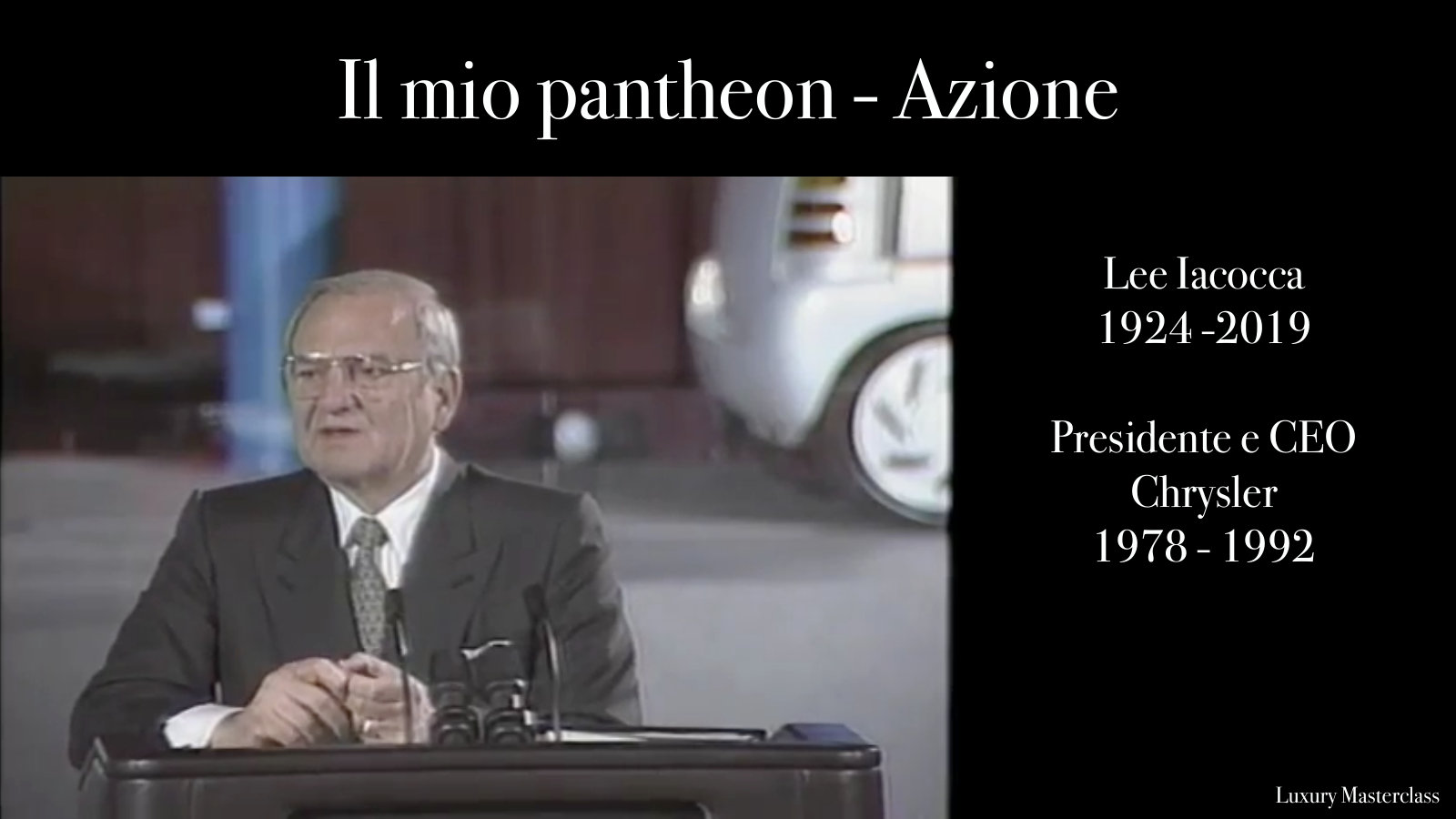
The first person in my pantheon is Lee Iacocca, chairman and CEO of Chrysler from 1978 to 1992. A pivotal manager for the American car industry: he started at Ford, where he created the Mustang, the brand's most famous sports car, and took Ford to victory at Le Mans. In 1978 he took on the challenge of a Chrysler on the brink of bankruptcy, rescued with government guarantees, which had to pay back American taxpayers' money: turning a company in effective default into a successful company, and paying off the debts of the previous management. He did it with a product innovation: he invented the minivan, a completely new car for families, which revolutionised the market. The minivan and the Jeep brand saved Chrysler and made it flourish.
The defence manual: the answer on Japan
You can tell the quality of the man from his answer to a hostile question at a press conference: why Chrysler was absent from the Japanese car market. The question implied: why are you incapable, while the Germans are selling? The answer is a defence manual for when you or your company are under attack: to be studied, learnt by heart and used as a style when a competitor, a journalist, a critic or a hater on Facebook attacks you or your company. The sequence is this.
He starts from the data, and bends it to his advantage: data can always be bent. He repositions the competitors: BMW and Mercedes are boutique cars for very rich people, and there are plenty of very rich Japanese in Japan, but it is 1.5% of the market. He uses irony, a masterstroke, about the Japanese knowing Jeeps well from the Second World War: the press laughs, and making journalists laugh is not easy. He gets to the heart of the matter, distribution, which as always is linked to margin: a network of company-owned dealerships is not financially sustainable, because a small showroom in Tokyo costs $23 million for the land alone. He shifts the problem to tariffs: a $25,000 Cherokee in Detroit becomes $50,000 in Japan, and distribution needs reciprocity, so the Bush administration has to push for the Japanese to open their market as the Americans opened theirs. He cites his successes, counting on his fingers and stressing them with body language: 4,000 cars in Korea starting from zero, 5,000 in Taiwan, 50,000 in Europe, and zero in Japan. And he turns the question around: "you go find out". I know it by heart. In the download module you'll find the transcript with the Italian translation.
Advertising in the first person
Iacocca's genius in the first rescue of Chrysler, and later the story repeated itself with Marchionne and the merger with Fiat, was introducing a new product category. Chrysler was neither number 1 nor number 2, it had always been the smallest of the Big Three with GM and Ford, and the marketing was perfect too: the tagline said "we don't want to be the biggest, just the best". At the centre was margin, more than turnover. In the TV adverts Iacocca went out in person to sell his products, embodied the spirit of the comeback, and spoke plainly about the company's past difficulties, presenting them as the lever that had driven the comeback and innovation: quality, hard work, commitment, the stuff America is made of, and a single ambition for Chrysler, to be the best.
What I applied to my company
From studying Iacocca I drew seven lessons. Use data according to my needs: data can be bent, and learning to bend it creates ways out. Always defend the company and myself when under attack, answering firmly, even in kind: pretending nothing has happened is a sign of weakness, and the opponent, internal or external, has to be put back in their place; you have to make it clear who is in charge. Innovate with products by introducing a new category, as we did with a product I will talk about in the module on marketing and launching new products. Don't be afraid of difficulties in the company, because ups and downs are normal in a company's life. Align my personal image with the brand. Don't be afraid to put myself out there: in the United States they have always done it; we have a different business culture, entrepreneurs who have never stood in front of a camera, and it is time to change. And above all: your personal image must represent your brand.
Charisma: Robert Kennedy
For charisma my mentor is Senator Robert Kennedy, 1925-1968, candidate for the presidency of the United States after his brother's death. The concept of charisma in leadership was introduced by the German sociologist Max Weber: everything that contributes to an unquestioned and widespread influence over other people, through authority, wisdom, doctrine, prestige, charm. I go into it in the chapter on leadership. Kennedy showed that in adversity the qualities that emerge in a leader are humility and ambition combined, which create an unassailable, compelling charisma, and that emotional intelligence is needed: the ability to be reflective and to engage people through reasoning and empathy.
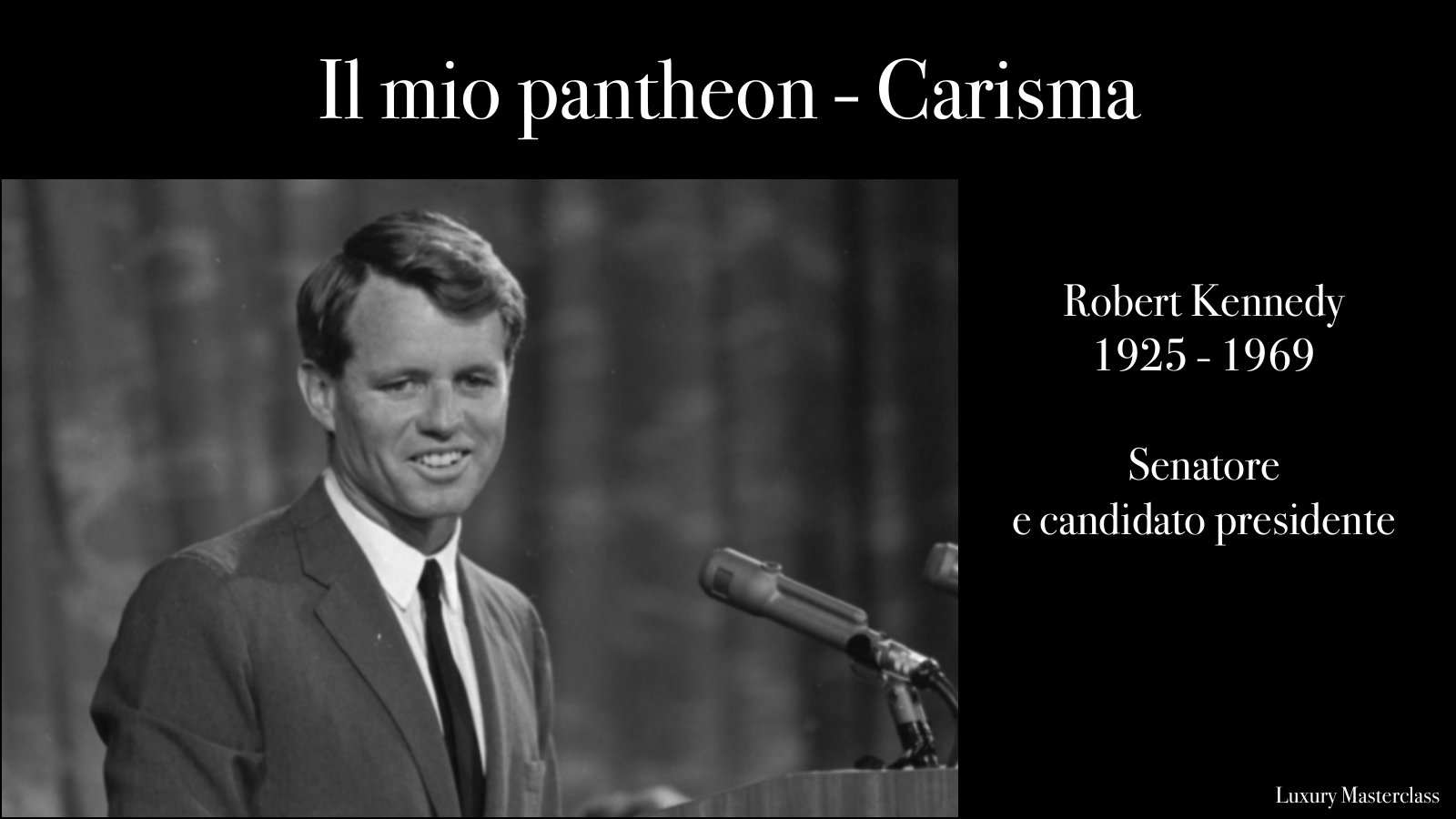
The proof is the speech Kennedy gave a few minutes after Martin Luther King was killed, to an audience that did not yet know. He had two options: cancel everything, or face the crowd, explain what had happened and turn the anger, the kind we have seen in recent days in Minneapolis and other American cities, into a positive emotion. It wasn't easy, but he managed it: he told the Black people tempted by hatred of white people that he too had had a member of his family killed by a white man, he quoted his favourite poet, Aeschylus, and he asked not for division and violence but for love, wisdom and compassion. Charisma can be developed through reasoning, emotional intelligence and empathy towards others. Kennedy showed that you can be a charismatic leader with humanity and moral values, convincing people through your own reasoning.
Training: Jim Rohn
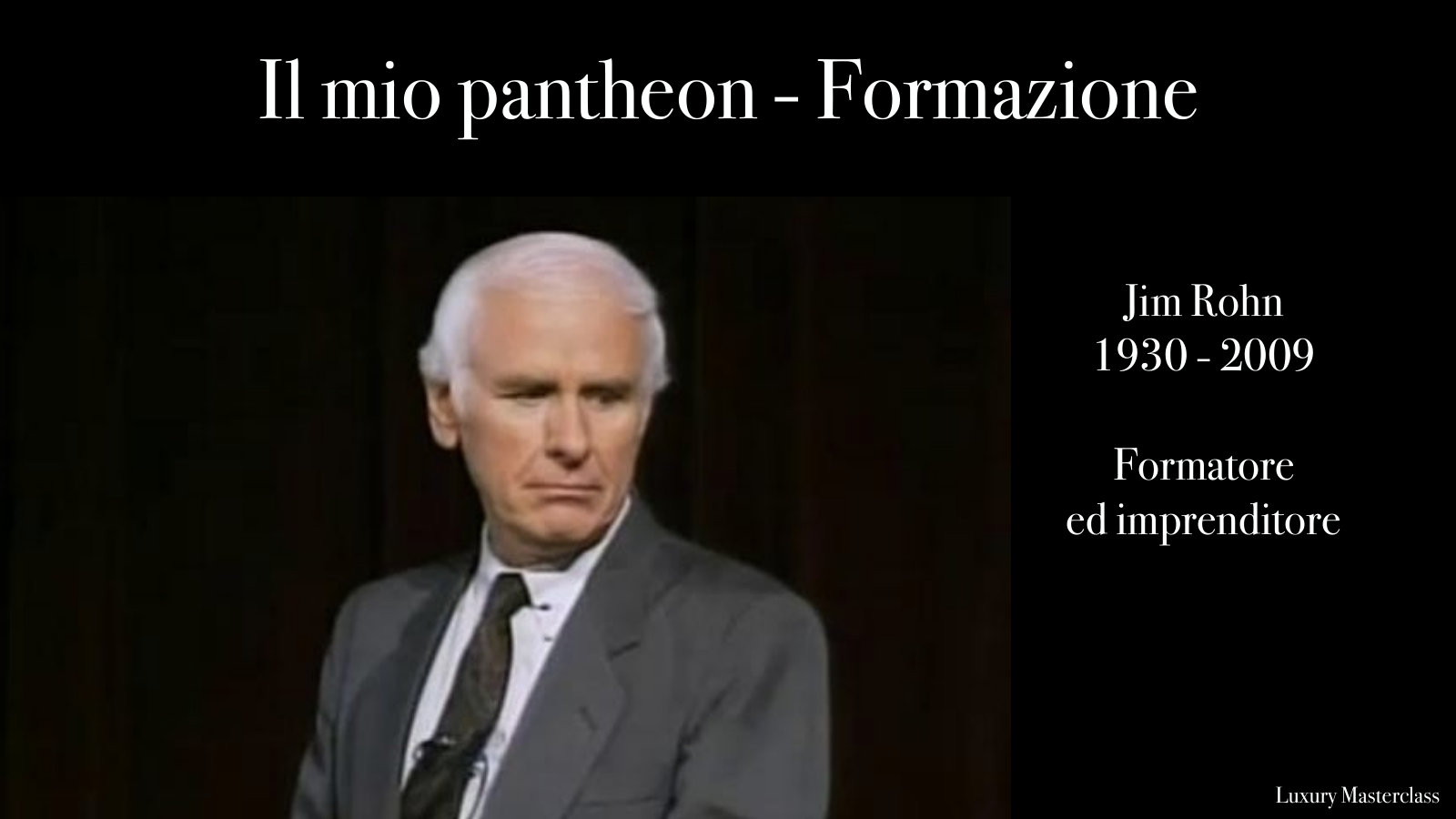
For training my mentor is Jim Rohn, trainer and entrepreneur, the father figure of many of today's motivational trainers. Besides the fact that I have studied and learnt a great deal from his seminars, books and audiobooks, available on his official website and on YouTube, Rohn is proof that private training can be done with class and elegance: in suit and tie, writing notes on the board, with a smartly dressed audience in the room taking notes. It is the picture of how training should still be today, without the excesses we have grown used to.
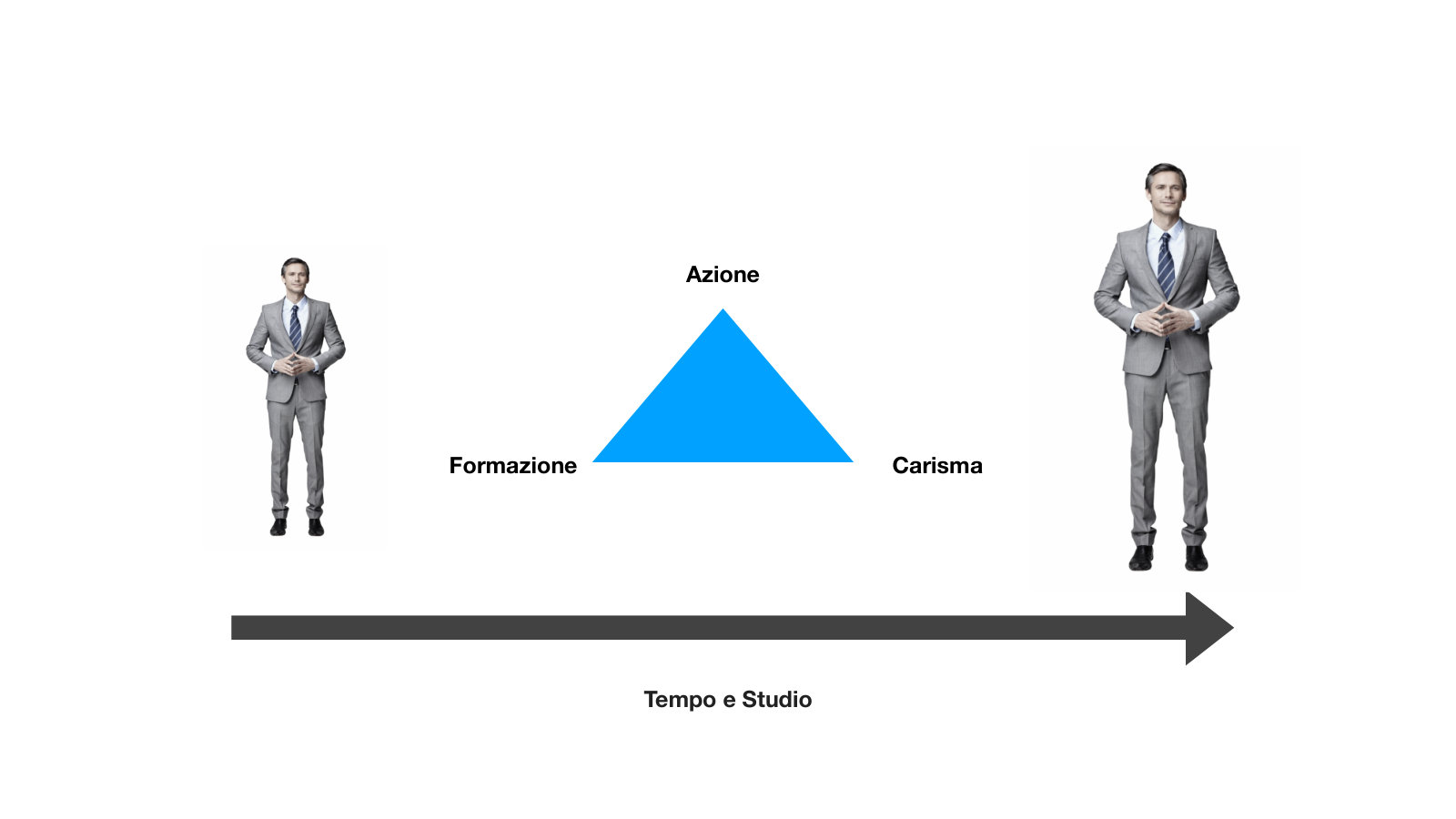
The pantheon is there to change the person you are. With one person linked to action, one to charisma and one to training, through time and study you will become a better person.
Perception counts more than reality
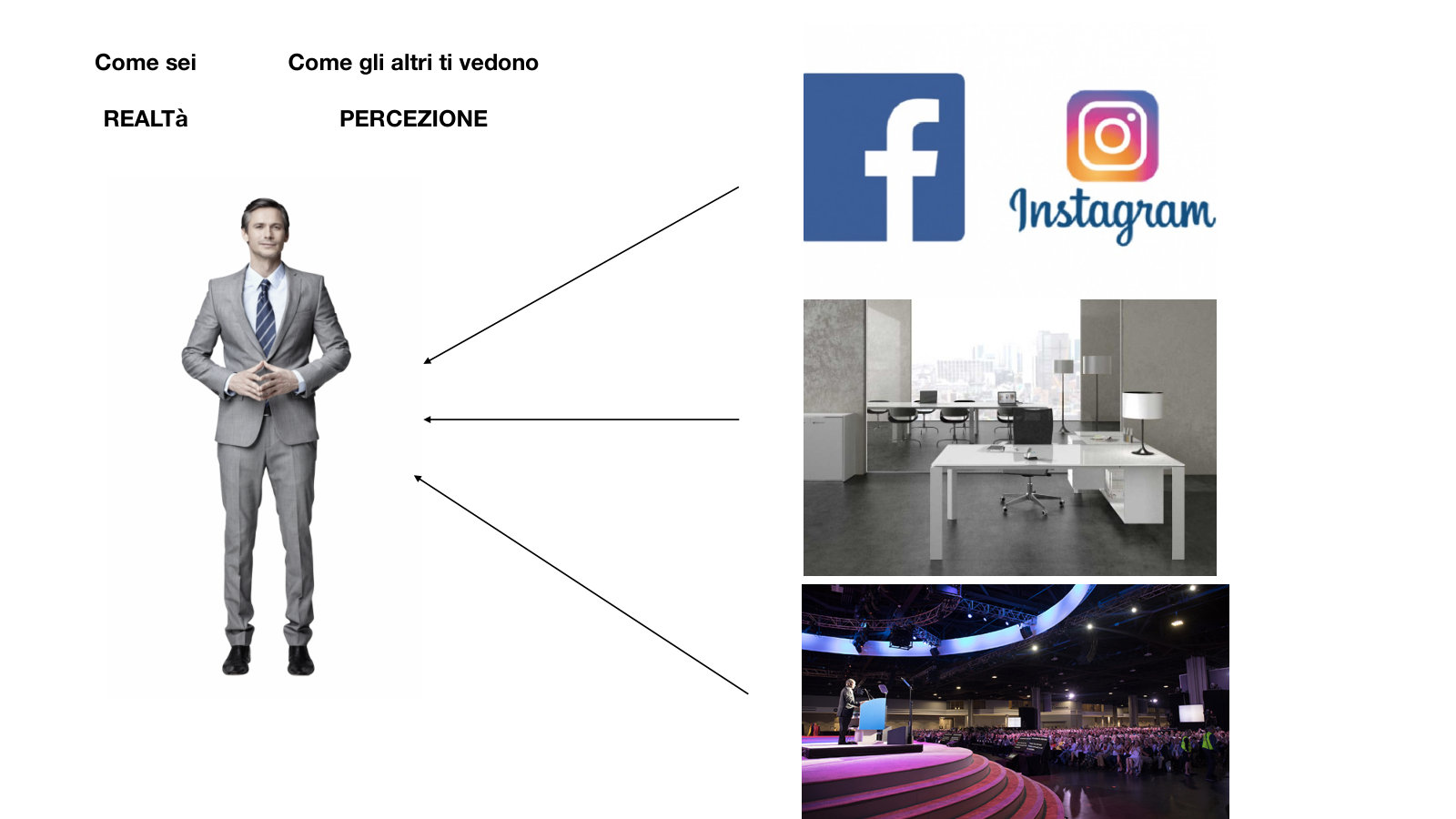
Your perceived image must be aligned with the brand and the product you sell. Today you see me in suit and tie, in an elegant setting, giving a training course: exactly in line with the image of my brand, my kitchens and my bathrooms. I can't turn up in a tracksuit, in flashy clothes, jackets with prominent logos or designer caps: they are fine for those who represent other brands and other products. The entrepreneur's image and the brand's cannot be in conflict. And in every setting linked to your company image you must be ultra-conservative, not only in your look: jokes, silliness, gossip and personal vices stay out of the workplace, where you have to create a climate of trust towards all stakeholders, suppliers, employees, customers.
People and potential customers must see you exactly as you want your image to be perceived by the market. Even if you are not like that, if you want to create a high-level image for your brand, at the start you have to be another person: what counts is the market's perception of you, so at the start you will also have to be a bit of an actor playing a part. What you are like in reality is a question mark, a metalhead or a clubber, it doesn't matter; the most important thing is how others see you, in the office, at conferences, at trade fairs, at courses, on Facebook, Instagram and LinkedIn. Then, month after month, perception and reality will merge into alignment. Every purchase that affects your image, car, watch, accessories, clothing, physical shape, haircut, must be in line with your brand's image: the potential customer, in photos, in videos or in person, must find themselves facing the living image of the brand. Be masters of your own image.
Never show off
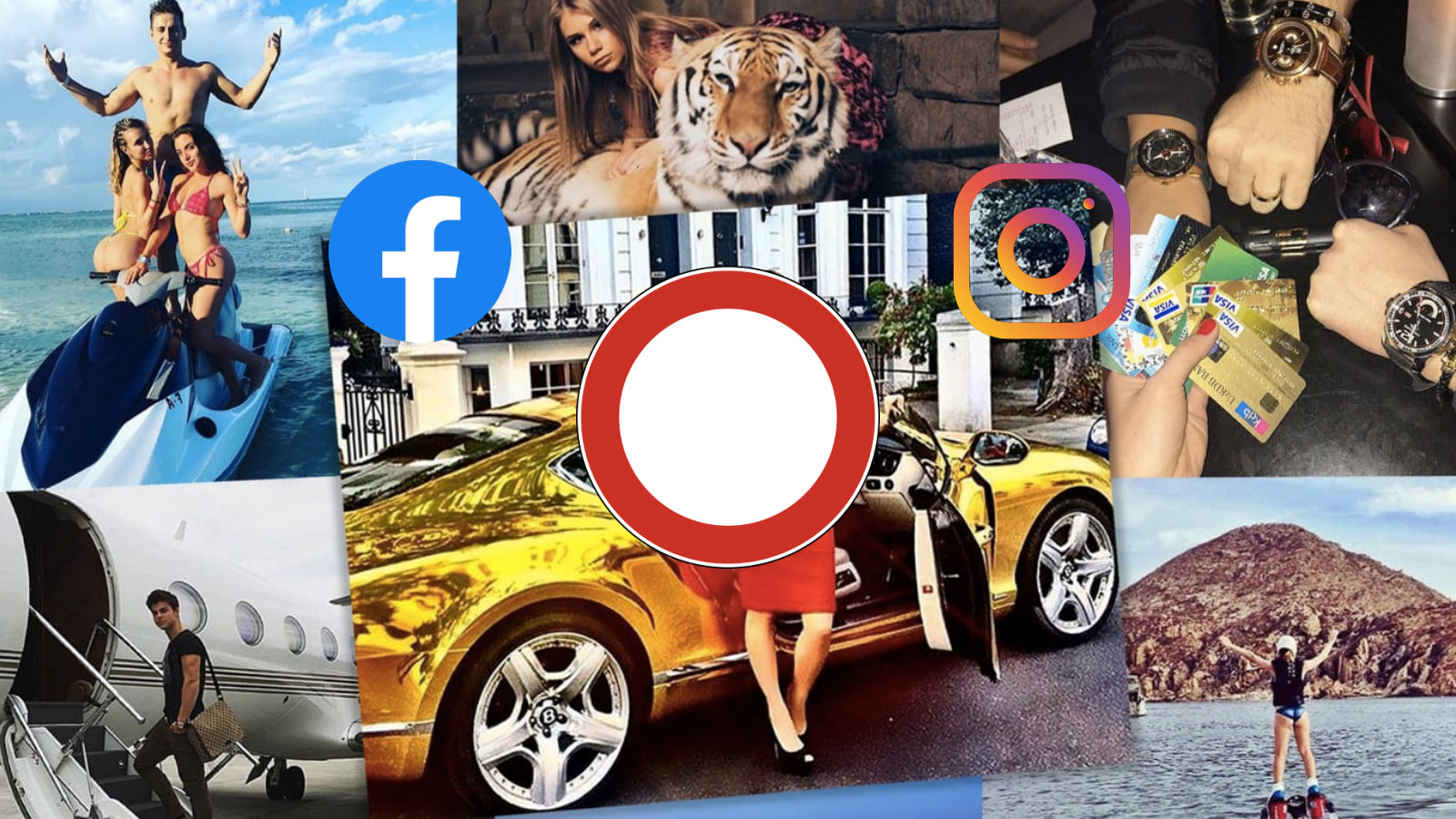
One thing to avoid absolutely is showing off wealth, above all on social media: photos with luxury cars, cash, credit cards, watches. Those who show them most probably don't have them, or need to show the market they have them to use them as a magnet. In the real world of selling complex products, costing more than €100,000 like the kitchen behind me, these things are to be avoided: those who have them don't show them. Don't behave like children on social media.
The exercise for this chapter: identify the leaders you admire and draw inspiration from in the three areas, action, charisma and training; find photos, videos, books and study materials, summarise them and apply their lessons to your life and your business. The Excel file is in the download module.
Frequently asked questions
What is a personal pantheon?
A circle of reference figures who inspire you with their vision and leadership. You start with three: one for entrepreneurial action, one for charisma and one for training, whose photos, videos, books and materials you study in order to apply their lessons.
How should you respond to a public attack on the company?
With Iacocca's method on Japan: start from the data and use it to your advantage, reposition the competitors, use irony, get to the heart of the problem, move the argument to a higher level, cite your own successes and turn the question around. Never pretend nothing has happened: it is a sign of weakness.
Must the entrepreneur's image match the brand's?
Yes: they cannot be in conflict. Whoever sells high-end products presents themselves consistently, in every setting and in every visible purchase, car, watch, clothing. What counts is the market's perception of you, and at the start you also have to play a part.
Why not show off wealth on social media?
Because in the real world of complex, expensive products, those who really have it don't show it. Photos of luxury cars, cash, credit cards and watches push high-end customers away instead of attracting them.
One live webinar a month.
One topic, questions from the business owners who join, answers without sales slides. It's free and in Italian, and it's the simplest way to get to know us.
See the next webinar →