



Mental isolation: how to get 6 clean hours a day to grow your company
The brain works by input and output: the sources you choose decide your opinions and your day. In this chapter of the 7 rules for winning in business I explain how to keep your brain clean, from newspapers read as print to social media treated for what it is, a slot machine, and how to divide the day into 4 hours of standard activity and 6 clean hours of strategic activity, measured with a real stopwatch.
We need your consent to play it: YouTube uses cookies that may profile what you watch.
Cookie preferences- The brain works by input and output: the sources of information you choose decide your opinions and your day.
- Select your sources and read them like a printed newspaper, without the website's banners.
- Social networks are a slot machine. Two phones: a clean one for work, one for leisure, an hour and a half in the evening.
- Every post is personal branding: publish only what is consistent with the image you want people to perceive.
- Divide the day: 4 hours of standard activity, 6 clean hours of strategic activity. Measure them with a real stopwatch for 30 days.
A clean brain
Mental isolation is a fundamental part of a business owner's mindset: only with a clean brain, one that receives correct information as input and puts out correct output, can we work well. Our goal in the working day is to have more clean hours available, that is, hours to devote to developing the company without any interruption. Today, interruption is the enemy of quality time.
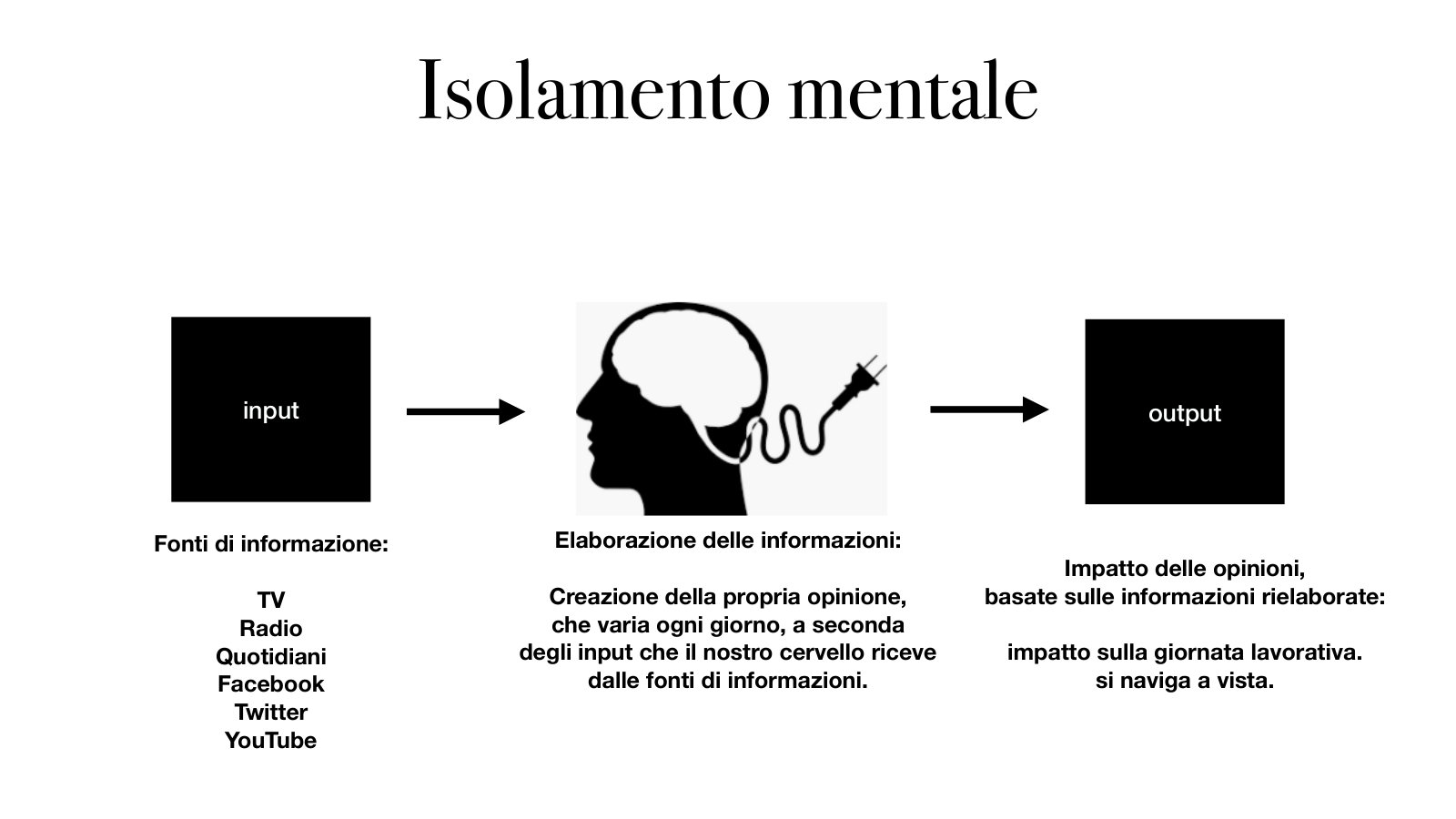
Our mind works through inputs, the sources of information such as TV, radio, newspapers and social networks, which are processed through reasoning and produce an output. That is how our opinion forms, and it changes every day depending on the inputs, and the output is the impact of those opinions on the working day: steering by sight, based partly on the moods the brain draws from the information we give it.
Rule 1: select your sources of information
You can't avoid keeping informed, because in the social game of life you have to hold high-level conversations with clients, investors and colleagues. But you have to select your sources. Mine are the American papers, the New York Times, the Washington Post and the Wall Street Journal, and in Italy Il Sole 24 Ore. What matters is to choose the print edition or the iPad app that reproduces the newspaper rather than the websites: reading as you would a newspaper develops reasoning, while the online version distracts you with banners, and with the computer in front of you, you end up browsing YouTube or social media, taking time away from the working day.
Rule 2: social networks are a slot machine
Perhaps the most important rule: using social networks during working hours must be cut out completely. A personal smartphone with the Facebook, Instagram, Twitter and LinkedIn apps, if you have only one and also use it for work, is today the greatest mental conditioning the brain can be subjected to. It works like a slot machine: scrolling the timeline with your thumb looking for the post, the news, the row, the comment, the like is exactly the mental pattern of the gambler who puts in the token and pulls the lever waiting for the win. The brain goes into a trance, detaches from reality, and the goal becomes to play and be distracted as much as possible. The paradoxical result is that, for people who spend four or five hours a day on Facebook, real life has become a distraction from virtual life, when it should be the other way round.
Some people say you should delete all the apps or use your iPhone like an old Nokia. I'm not convinced: if we cut ourselves off from social media completely we no longer understand where the world is going, where and how to invest the advertising budget, and we can't do a bit of intelligence on our competitors. My view is to have two smartphones. One used only for business, kept clean like a Nokia: calls, work video calls and messaging apps. The other for leisure, with all the social apps installed, to which you give an hour, an hour and a half a day, put in the diary, as people once did with television: in the evening, from 7 to 8:30 pm or from 9 to 10 pm, I relax on social media, see where the world is going, look at the groups I'm interested in, study the ads. During working hours the social phone stays in a drawer, physically away from where you work, and you don't touch it. That way you make the most of your time without wasting it on the slot machine.
Every post is personal branding
Using your personal profile to post and interact must follow a strategic vision. Before every post, comment, like or share, ask yourself: what do I gain as a person? Does this post serve my interest? Is it consistent with the image I want people to perceive, or does it clash with the perception people have of me? Every post must be part of a bigger design, the creation of your personal image. You have to think selfishly, otherwise the brain stays trapped in the slot machine. What we post must be consistent with the image that clients, suppliers, stakeholders and potential clients should perceive: I never post my leisure hours on the sofa, because it isn't in my interest. People believe what they see, and if for months and years you build a coordinated image, their minds will understand that you are exactly what you want to show. As I said in the previous module, you also have to be an actor and play a part.
Time management
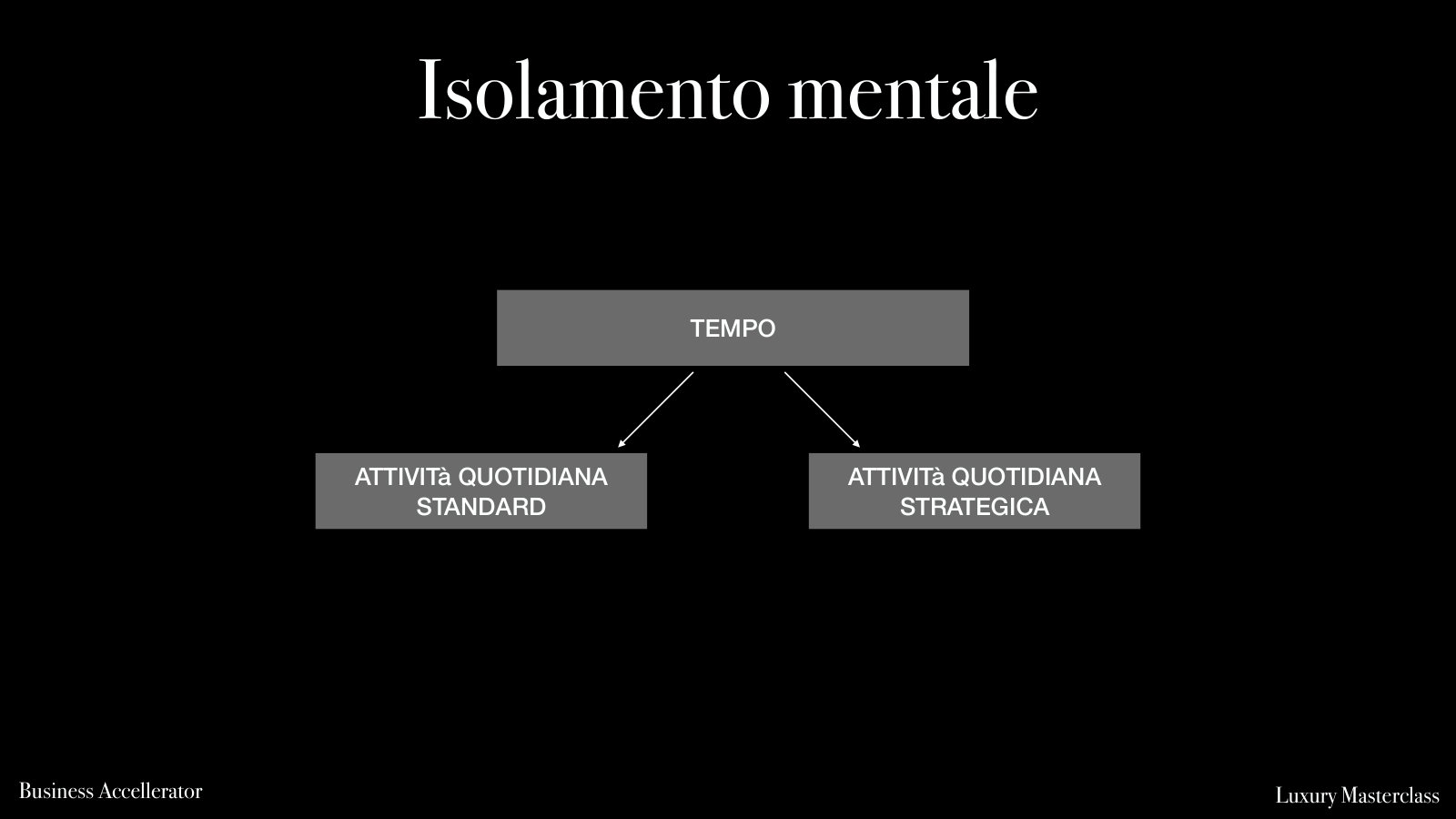
When I work I need to be physically isolated from my team, because I work with my head: in a room or a single office with the door closed, to manage interruptions. Emails, phone calls and WhatsApp messages break the flow of work I can do in a clean hour. You have to divide the day's activity into two macro-areas: standard daily activity and strategic daily activity.
Standard activities are checking emails and data, meetings, phone calls. In a day of at least 10 hours, they should be placed in slots at the beginning, the middle and the end: I get to the office at 8, from 8 to 9 or 10 I check emails, plan the diary, which I should have planned the evening before, divide up the work with my team, hold phone meetings; in the middle of the day a check of emails; at the end I check how the activities went. The problem is that these activities often take up 90% of a business owner's time, and there is no time left to think about how to grow the company. My advice is to give 4 hours a day to standard activities, leaving 6 clean hours for strategic activities: the ones that bring value, devoted to reasoning and to company development plans, to developing marketing and sales, the activities that grow margins.
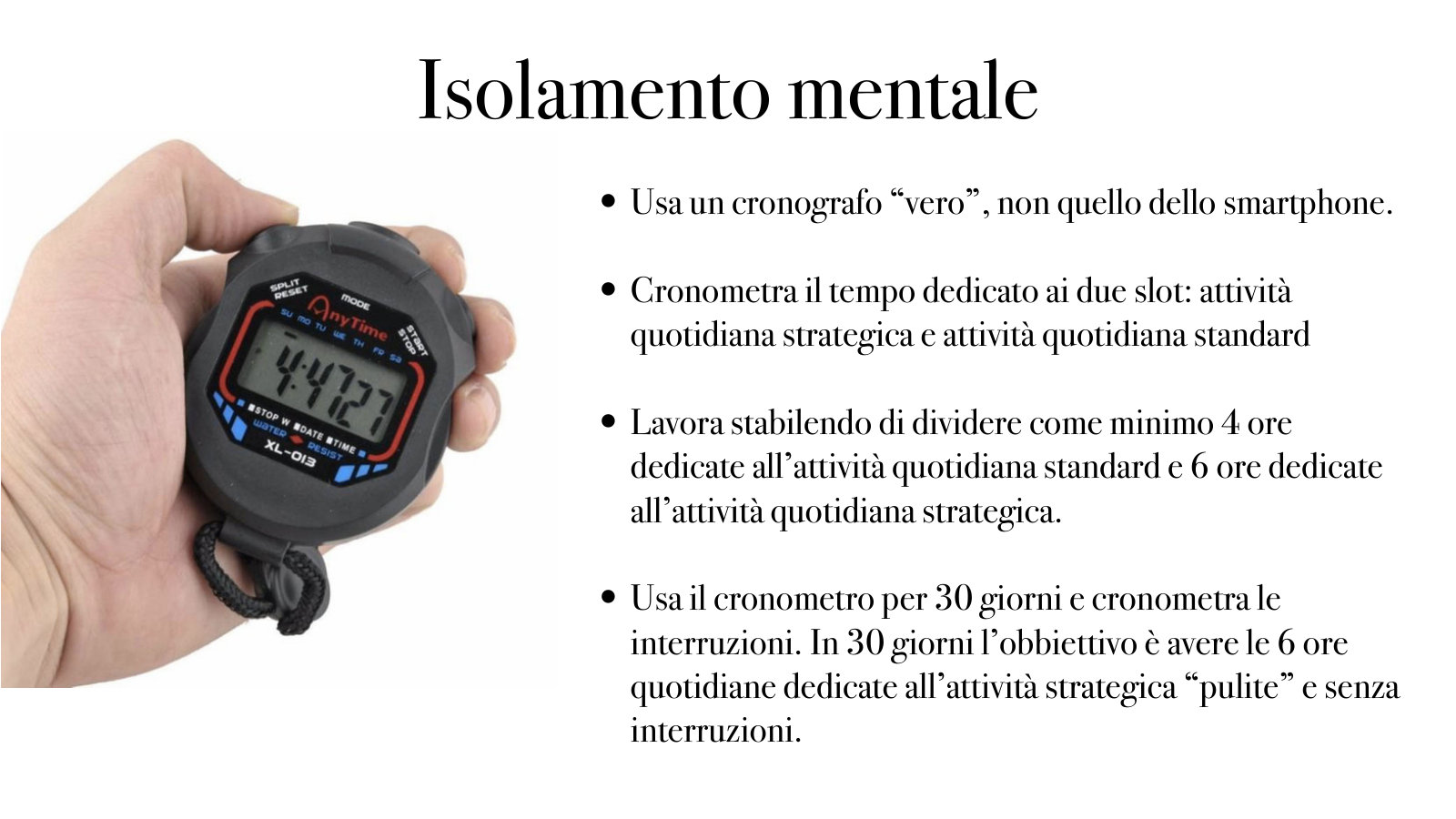
To isolate yourself mentally and put these strategies into practice you need a real stopwatch: I went on Amazon and bought one, not the one on the smartphone, otherwise you fall into the trap of looking at messages or social media while timing. Time the hours devoted to the two slots, work to divide them steadily into at least 4 hours of standard activity and 6 of strategic activity, and for 30 days time the interruptions too. The goal is to reach 6 clean strategic hours a day, without interruptions. You get there step by step, and it is a journey you have to start. In the download module you will find the Excel file for this exercise.
Frequently asked questions
Why have two smartphones?
Because a smartphone with social media is the greatest mental conditioning the brain can be subjected to, but cutting yourself off from social media entirely stops you understanding where the market is going. A clean phone for work, one for leisure to use for an hour and a half in the evening, locked in a drawer during the day.
How should you divide the working day?
At least 10 hours: 4 of standard activity, emails, data, meetings and calls, grouped in slots at the beginning, middle and end of the day, and 6 clean hours of strategic activity, the ones that grow marketing, sales and margins.
Why read newspapers in print or in the app?
Because reading as you would on paper develops reasoning, while news websites distract you with banners and links and, with the computer in front of you, lead you to browse social media, taking time away from the day.
How do you measure progress?
With a real stopwatch, not the one on the smartphone: for 30 days you time the hours in the two slots and the interruptions, with the aim of reaching 6 strategic hours without interruptions.
One live webinar a month.
One topic, questions from the business owners who join, answers without sales slides. It's free and in Italian, and it's the simplest way to get to know us.
See the next webinar →