



Self-discipline: sacrifice, focus and determination matter more than motivation
Motivation lasts three days, then you slip back into old habits. In this chapter of the 7 rules for winning in business I explain why self-discipline matters more: it is the choice to control yourself through sacrifice, focus and determination, with the example of Rocky III and the two ways of spending a lockdown.
We need your consent to play it: YouTube uses cookies that may profile what you watch.
Cookie preferences- Self-discipline is more important than motivation: it is the choice to control yourself and your impulses.
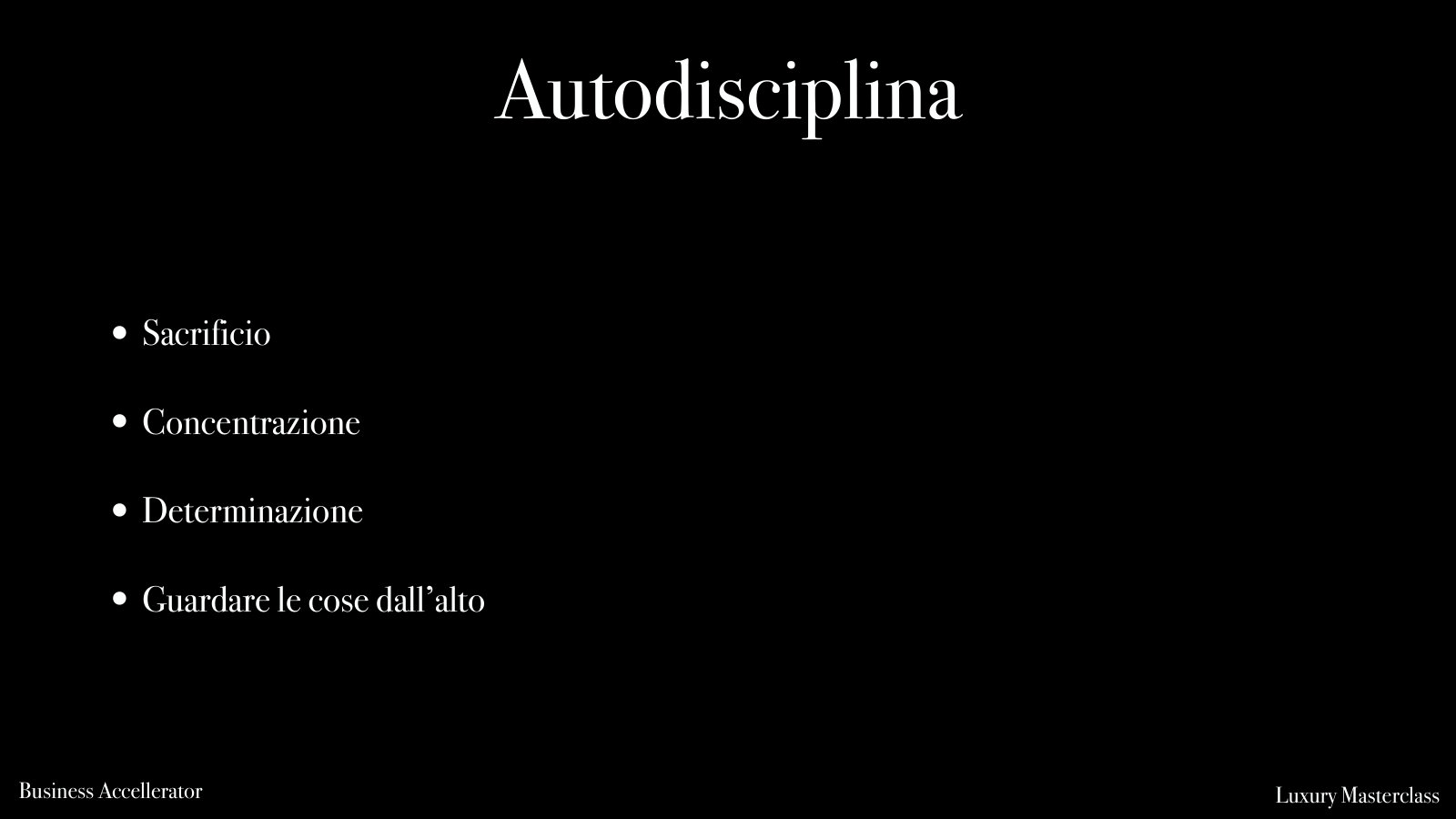
- Three components: sacrifice, focus, determination.
- Sacrifice: giving up short-term pleasures for long-term projects. Six days out of seven, at least ten hours a day.
- Determination: not quitting at the first sign of difficulty. Results come in the medium to long term.
- The real strength of self-discipline is beating motivation: producing 10 hours a day however motivated you feel.
More important than motivation
Self-discipline is one of the most important things an entrepreneur's mind has to develop. It is even more important than motivation, because it is the choice you make to control yourself and your impulses: reaching your goals through sacrifice, focus and consistent good habits. If I have to reach a goal I have to give quality time to analysis, develop a strategy and carry out activities, and I commit that precious time through self-discipline. It comes down to three points: sacrifice, focus and determination.
Sacrifice
Without sacrifice you get nothing, especially with ambitious goals. Sacrifice means giving up the instant, short-term pleasures that condition the brain, such as social media, alcohol, television, YouTube and Netflix, in order to complete long-term projects, which are the hardest. It also means not living surrounded by so many comforts that they distract you from the goal. I am not saying you should live like a Spartan, but relaxing too much is counterproductive: work at least six days out of seven, at least ten hours a day. A garden has to be tended to stay green, otherwise the weeds grow, and the same goes for the brain if we don't work with focus six days out of seven.
We saw it during the lockdown too: some people used self-discipline to create something of value (I, for example, built this course, physically, with the slides) and others watched Netflix and YouTube and filled themselves with alcohol so as not to think. I would have liked to do nothing for two months and relax for the first time in my life too, but in the end I would have gone back to the company like a zombie. You have to stay on it and make sacrifices for ever more ambitious goals. Rocky III sums it up perfectly, even if it is a film: Rocky, world champion, trains in the most luxurious gym, surrounded by press, fans, merchandise and public relations; his trainer warns him that this way they will lose, and he does lose the first fight against the challenger. Then he turns to sacrifice: an ugly, uncomfortable gym in Los Angeles, an ugly flat, a different way of living, and he wins the rematch. A fictional story, but with some truth in it.

Focus
Focus is the mental concentration that lets you work for hours without a break to reach your goals, and it is closely tied to self-discipline and to the mental isolation covered in the previous chapter. It is about changing the way we relate to what we experience and do.
Determination
Determination comes from the Latin determinare, and in plain terms it means not giving up. If you meet signs of difficulty in reaching a goal, accept the discomfort that comes with sacrifice: sometimes to grow you have to work by subtraction, remove comforts, stay focused and think strategically. Results come in the medium to long term. You cannot expect results days or weeks after starting a process: diets and exercise only work over the medium to long term.
The most important thing is the ability to work regardless of your level of motivation. I take a course, I am extremely motivated, for the first three days I work like mad, then I see that things aren't working, which is obvious, because in three days they can't work, I lose motivation and go back to my old habits. The real strength of self-discipline, made of sacrifice, focus and determination, is beating motivation: working and producing ten hours a day, at least six of them clean hours spent developing your company, whatever your level of motivation that day.
Frequently asked questions
Why is self-discipline more important than motivation?
Because motivation is a state of mind that lasts a few days, while self-discipline is the choice to control your impulses and to work and produce every day regardless of how you feel.
What does sacrifice mean for an entrepreneur?
Giving up the instant pleasures that condition the brain, such as social media, alcohol, television and series, and too many comforts, in order to complete long-term projects: at least six days out of seven and ten hours a day.
When do the results come?
In the medium to long term, as with diets and exercise. Expecting results after days or weeks leads you to lose motivation and give up: determination means not quitting at the first sign of difficulty.
How does self-discipline connect to mental isolation?
Focus, the concentration that lets you work for hours without interruption, depends on mental isolation: selected sources, social media kept out of working hours and six clean hours a day.
One live webinar a month.
One topic, questions from the business owners who join, answers without sales slides. It's free and in Italian, and it's the simplest way to get to know us.
See the next webinar →